
Add Allociné to your favorite sources
Clad in a white kimono adorned with butterflies, with a piercing gaze and masterful swordsmanship, this heroine stands as one of the most formidable in film history! Let’s revisit a pop culture icon who inspired Quentin Tarantino.
In 1972, screenwriter Kazuo Koike and artist Kazuo Kamimura introduced a vengeful heroine who would revolutionize the genre: Lady Snowblood. This manga, spanning 3 volumes and 1388 pages, was later adapted into a film in 1973 by Toshiya Fujita.
A Frightening and Furious Vengeance
The story takes us to turmoil-ridden Meiji era Japan. A woman named Sayo gives birth to a daughter behind prison bars during a harsh winter. She names her Yuki (Snow in Japanese), bestowing upon her a grim and unavoidable mission: to avenge her family.
Years earlier, four criminals had murdered her husband and son, raped her, and shattered her life. Sayo managed to kill one of them but ended up imprisoned, her hatred carrying beyond the grave.
Yuki grows up without a childhood, love, or true identity, molded from a young age to become a weapon. Under the relentless discipline of a sword master, she learns to kill with almost supernatural precision.
By the age of 20, she has become Lady Snowblood, a mesmerizing white figure who emerges like a ghost in Japan. Her pristine kimono contrasts starkly with the vivid red of blood: in her hands, violence becomes almost an art form.
Armed with her sword hidden within her umbrella, Yuki methodically tracks the three remaining criminals. Each murder brings her closer to fulfilling her mother’s vengeance, but also to a daunting question: can she exist as anything more than an instrument of hatred?
Cold, silent, with unfaltering elegance, she moves through a world of men she overpowers with almost insolent confidence. Yet, behind her impassive gaze hides a woman sacrificed before she could even choose her own path.
Her battles then erupt like blood-soaked paintings, where Yuki’s beauty makes her brutality all the more striking. As her enemies fall, the family vengeance transforms into a legend: that of a woman born from pain and turned into her own myth.
A Charismatic Heroine
Portrayed by Meiko Kaji, Lady Snowblood becomes a cult heroine, spectral, sensual, tragic, and incredibly powerful. A true icon of Japanese vengeance cinema, Yuki seems to walk between life and death, until her final duel decides whether she belongs to her mother… or to herself.
If Lady Snowblood seems familiar yet you’ve never seen it, that’s no surprise. Indeed, she heavily inspired the character of Beatrix Kiddo, played by Uma Thurman in Quentin Tarantino’s Kill Bill.
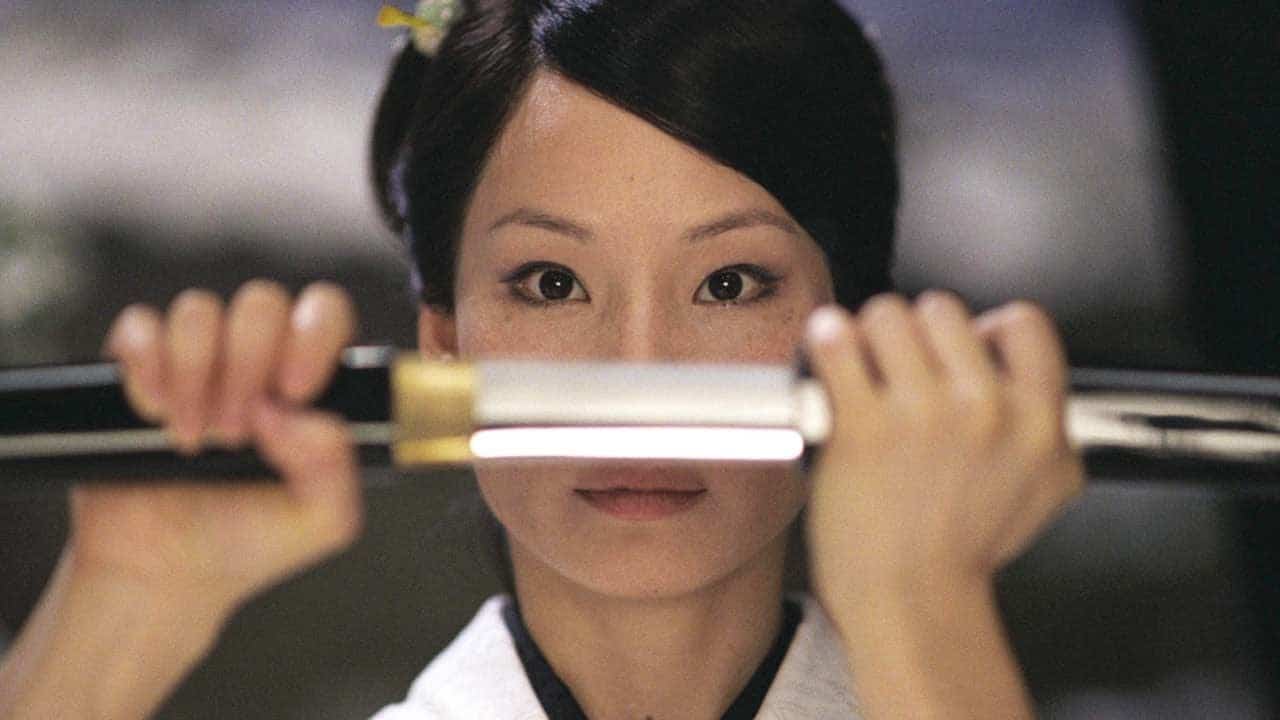
Moreover, the attire of O-Ren Ishii, portrayed by Lucy Liu, is also a tribute to Lady Snowblood, especially in the climactic sequence of Volume 1 and her bloody battle against Kiddo.
And if Lady Snowblood is so memorable, it’s because she transcends the typical vengeance film. Yuki becomes a powerful visual and feminist icon in Japanese cinema, wielding considerable influence.
This heroine is instantly recognizable, which initially allowed audiences to identify and connect with her. Actress Meiko Kaji, with her white kimono, icy stare, sword, and umbrella, forms an iconic silhouette. Yuki doesn’t need extensive dialogues: her posture, stride, and gaze tell her story.
Moreover, Yuki is a woman who overturns power dynamics, and in 1970s Japanese cinema, this was quite bold. In a male-dominated world, Yuki isn’t looking to be rescued. She stalks, confronts, and eliminates those who destroyed her family, giving her a particularly striking presence to audiences.
Vengeance Becomes an Art
Furthermore, as Tarantino understood 30 years later with Kill Bill, vengeance becomes an aesthetic. Lady Snowblood transforms violence into a graphic spectacle. The white of the snow and her kimono against the red of blood creates iconic images.
Yuki resembles more an apparition or a legend than a realistic heroine. Moreover, she’s a figure both strong and tragic; what touches the audience is that she’s not just a strong woman. She was robbed of her childhood and freedom to become the instrument of her mother’s vengeance. Her power is also her curse.
Actress Meiko Kaji brings a unique personality to the character. Her restrained, almost impassive performance contrasts with the extreme violence of her actions. This coldness makes Yuki even more captivating; she never seeks to impress, and it’s precisely this that makes her fascinating.
An Almost Mythological Symbol
Ultimately, she has become a true symbol for millions of viewers. Lady Snowblood represents the ultimate revenge of a woman from whom men took everything. Yet, she remains ambiguous: she wins her battles, but she still suffers internally because her childhood and life were stolen.
In essence, it’s this contradiction that makes Yuki unforgettable. She is magnificent and terrifying, victim and predator, human and almost supernatural. The audience does not merely admire her because she can wield a sword; they are captivated by the legend she has become.
And probably, that’s where the strength of Lady Snowblood lies. Yuki is not just a film heroine. She is an image, a woman in white traversing a world drenched in blood, remembered by popular cinema.
Similar Posts
- Al Pacino & Kevin Costner’s Favorite Director Returns After 7 Years with New Thriller!
- Discover the Classic Inspiring Scarlet’s Latest Anime by a Top Japanese Director!
- Top Action Heroine Rivals Stallone & Schwarzenegger for 46 Years!
- Iconic Heroine Stars in 9 Films of This Famous Saga!
- Steven Spielberg’s Key Role in Disney’s New Snow White Film Revealed!

A passionate journalist, Iris Lennox covers social and cultural news across the U.S.