
Approximately 900 U.S. Troops Remain in Syria Amid Escalating Conflict Near Damascus
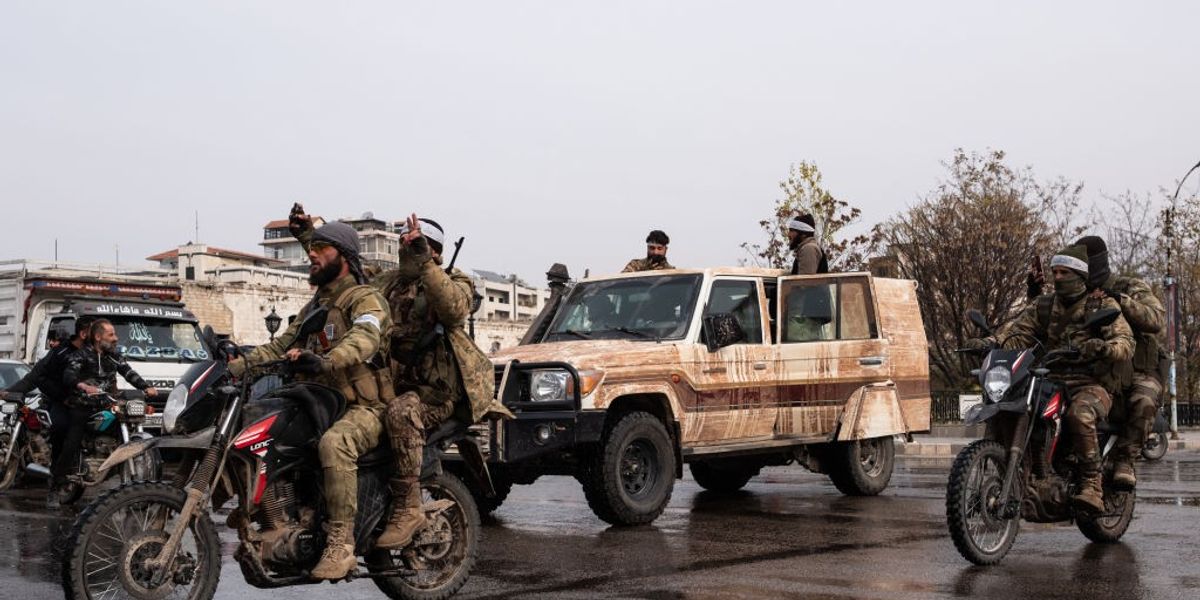
The swift advancement of Syrian rebel forces toward Damascus, the capital, coupled with the potential downfall of President Bashar al-Assad’s regime after a prolonged civil war, has refocused attention on the ongoing presence of U.S. military personnel in Syria, despite lacking a definitive legal mandate.
It is estimated that the U.S. has about 900 soldiers stationed primarily in northeastern Syria, along with an undisclosed number of private contractors. Nick Turse, a writer for The Intercept, noted on Thursday that U.S. forces in Syria “have faced attacks several times a week on average since last October,” based on internal Pentagon data.
“The decision to keep troops in harm’s way to uphold foreign policy integrity is increasingly perilous amidst the renewed Syrian civil war and the conflict in Gaza,” Turse stated.
Kelley Vlahos, a senior advisor at the Quincy Institute for Responsible Statecraft, expressed on Twitter last Saturday that “regardless of the Pentagon’s stance,” U.S. forces “are probably engaged in the current widespread conflict.”
A report by Reuters on Tuesday mentioned that as rebels pushed toward Hama, “combatants from a U.S.-supported, Kurdish-led coalition clashed with government troops in the northeast, opening a new battlefront along a crucial supply route and exacerbating Assad’s difficulties.”
As the alliance of groups, including the Islamist Hayat Tahrir al-Sham (HTS) and elements of the Turkish-supported Syrian National Army, rapidly conquers vast territories, the White House National Security Council (NSC) clarified last weekend that the U.S., which has previously supplied arms and training to Syrian rebels, “is not involved in this offensive.”
“The United States, along with its partners and allies, calls for de-escalation, the protection of civilians and minorities, and a genuine and credible political process to conclusively end this civil war through a political solution in line with UNSCR 2254,” NSC spokesperson Sean Savett stated. “We will also continue to safeguard U.S. personnel and military positions, which are crucial to prevent ISIS from reemerging in Syria.”
On Friday, the White House informed Congress that “a limited number of U.S. Armed Forces are retained in strategically important locations in Syria to carry out operations alongside local, vetted ground forces against ongoing terrorist threats from the region.”
Former President Donald Trump, who during his first term chose to maintain U.S. troops in Syria to exploit the nation’s oil reserves, shared on social media last Saturday that “the United States should stay out of” the ongoing conflict, emphasizing, “This is not our battle. Let it unfold. Do not interfere!”
As reported by The Associated Press, Trump’s post appeared as the rebels’ “rapid advance through Syria continued… with reports reaching the suburbs of the capital and officials denying rumors that President Bashar al-Assad had fled the country.”
Hassan Abdul-Ghani, a rebel leader, announced on Telegram that the rebels were initiating the “final phase” of their assault as they began to surround Damascus. According to Al Jazeera, local sources revealed a “wave of panic as army units retreated from their positions around Damascus.”
They also confirmed that the opposition had made gains in the western rural areas of Damascus and that military withdrawals were occurring from towns in Eastern Ghouta, leading to a surge in demand for food in the capital’s markets.
The government’s military efforts are supported by Russian air strikes, Hezbollah, and Iraqi militia groups.
As reported by Reuters, “Iran’s Foreign Minister Abbas Araqchi stated in an Arabic interview that Iran would consider dispatching troops to Syria if requested by Damascus, while Russian President Vladimir Putin called for an end to ‘terrorist aggression’ in Syria.”
In a video statement on Saturday, a Syrian military commander declared, “our valiant army continues its operations against terrorist groups with high intensity in the regions of Hama and Homs countrysides and northern Daraa, inflicting significant casualties.”
In the U.S., anti-war legislators have increasingly scrutinized the role of American forces in Syria, initiating proposals to mandate their withdrawal. In March 2023, a bipartisan resolution in the U.S. House, which would have required the withdrawal of U.S. forces from Syria within 180 days unless authorized by Congress, was rejected by a combination of 170 Republicans and 150 Democrats. A similar initiative later failed in the U.S. Senate.
Erik Sperling, executive director of Just Foreign Policy, commented to The Intercept on Thursday that the Biden administration has avoided public debate over the Syrian conflict, aware that “the American public does not support another Middle Eastern war.”
“They realize there is no widespread support for risking U.S. troops in this,” Sperling added, cautioning that “many of Trump’s advisors will attempt to pull him deeper into this regional conflict.”
The recent escalation of the Syrian civil war has had devastating effects on civilians caught in the crossfire. Human Rights Watch (HRW) expressed concern on Wednesday that “the onset of major hostilities… poses a substantial risk of severe violations against civilians by both the opposition and the Syrian government.”
“The long history of atrocities committed by all sides in the Syrian conflict is likely to continue unless leaders commit to supporting accountability measures,” stated Adam Coogle, deputy Middle East director at HRW. “Without genuine efforts towards justice, the suffering of Syrians will persist, regardless of who controls the territory.”
Similar Posts
- US Strikes Hit 75+ Targets in Syria Following Assad’s Fall
- US and Israel Topple Syria in the Name of Peace – What Really Happened?
- Sudan Crisis Alert: World’s Largest Humanitarian Disaster Ignored Globally!
- Pentagon Deploys US Troops to Israel, Sparks Major Concerns
- Hezbollah Retaliates! Israeli Airstrikes Spark Fears of Looming Catastrophe

An economic reporter, Dax Everly breaks down financial trends and their impact on Americans’ daily lives.