
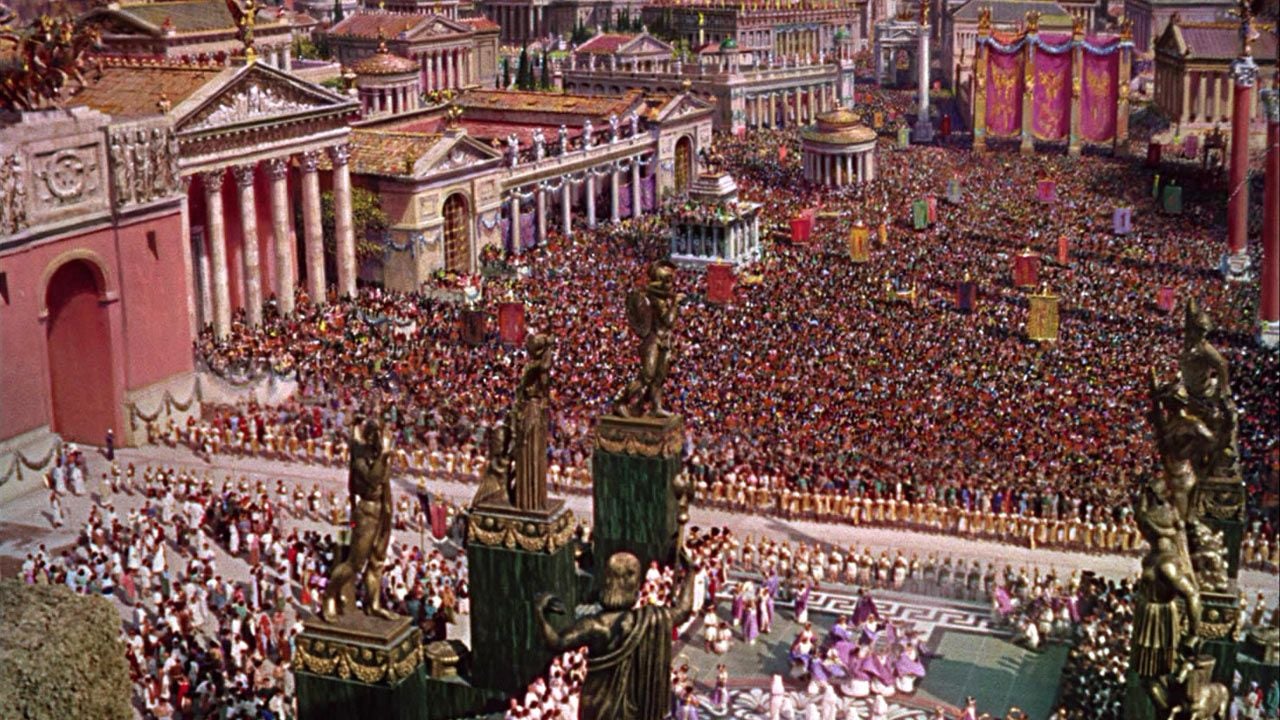
Released in 1951, “Quo Vadis” is a prime example of the biblical epic films produced by Hollywood in the 1950s, aimed at competing with television. It was a time of utter extravagance…
In Hollywood, religious themes have always combined two successful elements: stories that are inherently universal (appealing to everyone) and spectacular visuals. Another significant advantage is that there are no expensive adaptation rights or royalties to pay; the characters are in the public domain.
Hollywood’s Significant Threat from Television
“Remember that cinema has often turned to the Bible and epic stories when it felt threatened,” argued David Shepherd, a Bible scholar at the University of Chester, in an interview with the BBC.
“At the start of the 20th century, cinema turned to the Bible to demonstrate to its critics that it was a force for good, not evil. In the 1950s, the rapid rise of television prompted directors like Cecil B. DeMille to turn to the Bible, producing or directing films such as Samson and Delilah, The Ten Commandments, or Ben-Hur.”
It was in this competitive logic against TV, which had forcefully entered American homes, that the Hollywood industry thus revived the wave of biblical epics. “Quo Vadis,” released in 1951, is one of its most illustrious examples.
Directed by Mervyn LeRoy, the film features a solid cast, including an outstanding Robert Taylor in the title role, and Deborah Kerr as the Christian woman he falls in love with. Most notably, Peter Ustinov delivers a brilliant and imperial performance – quite literally – as the cruel Roman Emperor Nero, a lover of poems and songs composed on his lyre, reciting his “mediocre verses” as his advisor Suetonius cruelly reminds him in the film, against the backdrop of the city of Rome consumed by flames…
The Most Profitable Film Since “Gone With the Wind”
The film’s title places the work in the vein of biblical epics, as it recounts the persecution of early Christians. It is actually derived from the phrase “Quo Vadis Domine” (“Where are you going, Lord?”) spoken by the Apostle Peter when Jesus appears to him on the Via Appia, outside Rome, in the Acts of the Apostles.
Upon hearing the Messiah respond that he is returning to Rome to be crucified a second time, Peter realizes his mistake in having abandoned the Christians to their fate. He then goes in his place and, according to the stories, ends up crucified upside down, out of humility, considering himself “unworthy to die like Christ.”
Dore Schary, the man who took over as head of MGM from Louis B. Mayer, spared no expense. Produced at a cost of 7 million dollars, equivalent to over 87 million dollars today, “Quo Vadis” was at the time the most expensive film ever made, and it achieved immense commercial success. Upon its release, it brought in more than 21 million dollars (equivalent to over 261 million dollars today), and was the most profitable film for MGM since “Gone With the Wind”.
“Quo Vadis” set numerous records: over 200 speaking roles, 120 lions, one bull, 150 sets, 15,000 costumes, including 36 dresses just for actress Deborah Kerr. And more than 30,000 extras, to fill the recreation of the great Circus Maximus, where Christian martyrs were thrown to the lions.
For comparison, the legendary chariot race in the film “Ben-Hur”, which required three months of filming preparation alone, displayed “only” 15,000 extras on screen. While this is far from the incredible funeral sequence of Gandhi in Richard Attenborough’s film, which featured 300,000 extras and entered the Guinness Book of Records, it is still quite impressive…
Similar Posts
- Can You Identify These 7 Movies From Just One Image? Test Your Film Knowledge Now!
- $97 Million Flop: The ’90s Adventure Film That Tanked and Killed a Legendary Studio!
- $30 Million Per Episode: This Western Series Is Among the Most Expensive Ever!
- Iconic ’80s Actor Peter Jason, John Carpenter Favorite, Dies at 80
- Nosferatu Director Takes on New Legendary Movie Monster!

A passionate journalist, Iris Lennox covers social and cultural news across the U.S.