
Follow AlloCiné on Google
Fifty years after Michael Landon’s series, Netflix recreates “Little House on the Prairie.” A family series that’s endearing… and more political than expected.
It was a bold move. When Netflix announced its adaptation of Little House on the Prairie, reactions were swift. Between the guardians of the legacy – nostalgic for the NBC series aired from 1974 to 1983 starring Michael Landon – and those who saw in this project a chance to “woke-ify” a conservative American myth, the ground was fraught. However, the outcome is a series that fully embraces its aims without compromising what made the original a success.
The new version is penned by Rebecca Sonnenshine (The Boys, The Vampire Diaries) and is based on the third novel by Laura Ingalls Wilder, which gives the saga its name. The Ingalls family leaves Wisconsin to settle in Independence, Kansas, hoping to build a better life.
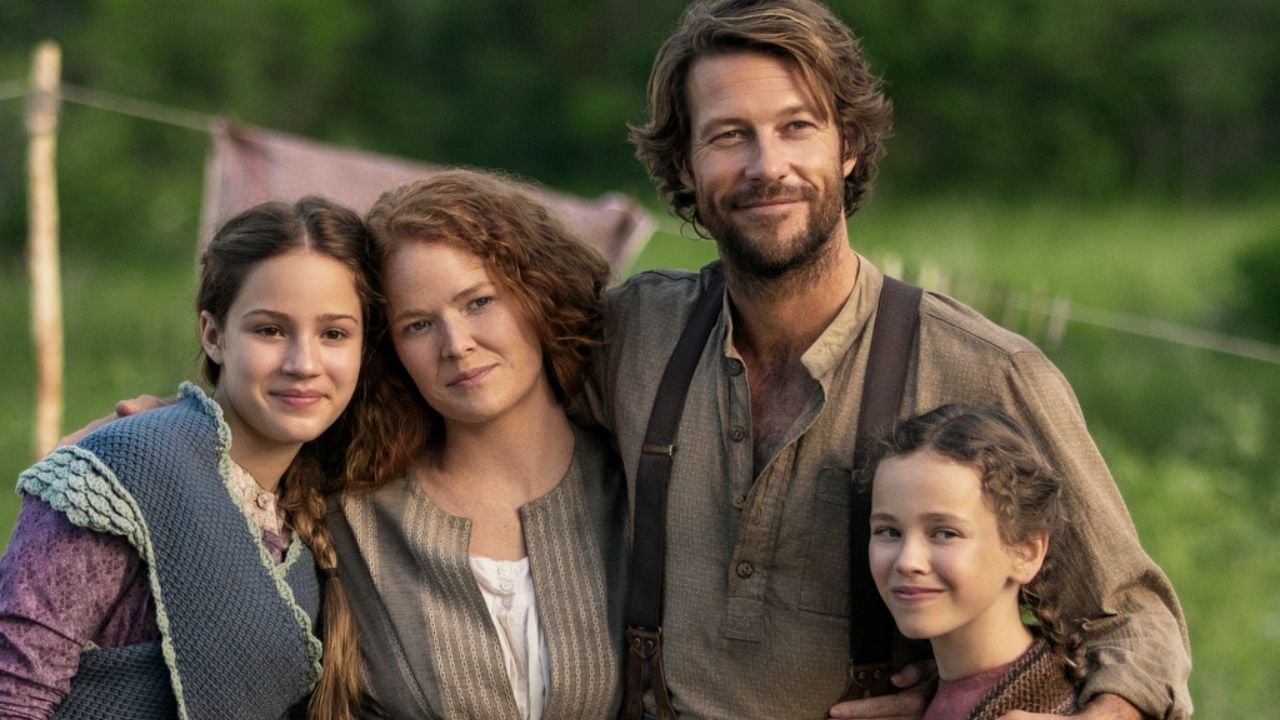
Charles (Luke Bracey, Hacksaw Ridge), Caroline (Crosby Fitzgerald, Palm Royale), and their daughters Mary (Skywalker Hughes) and Laura (Alice Halsey) battle fever, wolves, and a fire in a supposedly idyllic prairie. Filmed in Canada, chosen for its pristine and preserved look, the location presented the crew with its share of tornadoes and floods during the shoot.
Family-Friendly, Kind, and Surprisingly Political
What strikes immediately is that the series delivers on its original promise. The characters are instantly likable. The familial warmth is intact. The pace is gentle and deliberately so. This is far from the cowboy versus Indians drama some feared – indeed, that was never the intention.
But Netflix goes further than the original by incorporating into the narrative the perspective of the Osage people, whose land makes up the very “Free Kansas” being parceled out to settlers. This is precisely the foundational paradox that the series finally dares to pinpoint. The Ingalls arrive on land the U.S. government presents as free, whereas it has always belonged to the Osages. The production consulted with members of the Osage Nation to enrich this aspect of the story.
The result is a series that tells almost simultaneously the grand narrative of America: the hope of the pioneers, sincere and moving, and the devastating consequences of westward expansion on indigenous communities. One might fault the series for occasionally lacking a more sharply critical view of this tension. It remains primarily a kind-hearted family work, not an indictment. But it refuses the comfort of pure myth, and that is significant.
The Series Has a Promising Future
All eight episodes of this first season are available as of July 9 on Netflix. The platform has already ordered a second season, which is officially in production. Fans of the original can look forward to meeting the new Nellie Oleson (Willa Dunn), the iconic small-screen nemesis and Laura’s great rival, as well as their beloved teacher Eva Beadle (Rachelle Lefevre). The grand narrative of America continues to unfold.
Similar Posts
- Shocking “Little House on the Prairie” Blunder Unnoticed for 45 Years in Season 6, Episode 20!
- Fired at 15: Why This Young Actor Lost His Job on Little House on the Prairie
- Carrie Ingalls Actress Devastated by Exit from Little House on the Prairie!
- Little House on the Prairie Star Reveals 48-Year-Old Feud With Co-Star!
- Michael Landon’s Most Touching Moment on ‘Little House on the Prairie’ Revealed!

A passionate journalist, Iris Lennox covers social and cultural news across the U.S.