
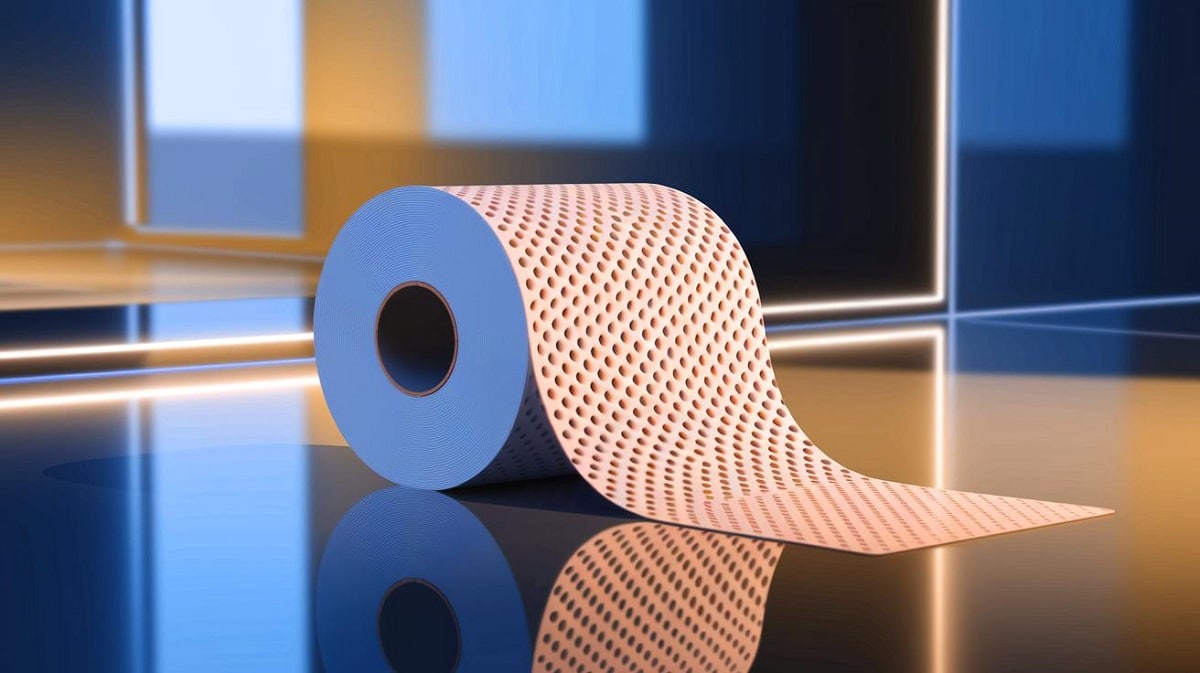
It’s not a smartphone, nor a self-driving car—yet this small innovation is quietly reshaping one of life’s most routine gestures. A simple tweak to toilet paper design is now making headlines, boosting sales, and proving that even the most ordinary products can spark a revolution.
A silent revolution in toilet paper
For decades, toilet paper barely changed. The roll sat there, perforated into neat rectangles, serving its purpose without much thought. But behind the scenes, major brands were locked in a fierce race to improve it—testing softness, strength, and efficiency.
The most recent breakthrough comes from Charmin, which after five years of research introduced a wavy perforation design called Smooth Tear. The goal was surprisingly universal: eliminate the frustration of sheets tearing unevenly.
The results? A 5% boost in business and a “significant increase in satisfaction” from consumers, according to company data reported by the Washington Post. It’s a reminder that innovation isn’t always loud or flashy—sometimes it’s hidden in the bathroom.
The engineering of touch
This redesign wasn’t a whim. Engineers at Procter & Gamble and rivals like Kimberly-Clark tested hundreds of prototypes. They examined not just the paper’s strength, softness, and moisture response, but even how it tore depending on whether the user was right- or left-handed.
The wave pattern isn’t decorative—it’s mathematics. Every curve was calculated to balance the angle of pull, tearing force, and compatibility with industrial production lines. Behind the neat sheet you rip away lies a complex system of rotating cylinders, synchronized teeth, and micro-adjusted anvils—an unseen ballet of precision engineering.
Paper, culture, and hygiene
Toilet paper, oddly enough, is a recent invention. Though paper dates back to ancient China, its personal use only took off in the late 19th century. Before that, people used whatever was available—leaves, cloth, corn cobs, or even old newspapers.
In 1857, Joseph Gayetty introduced the first “medicated paper,” which was mocked at the time. The real turning point came in 1890, when the Scott brothers popularized the perforated roll. Since then, the evolution of toilet paper has mirrored shifting cultural priorities—placing more emphasis on hygiene, comfort, and convenience.
Subtle innovation that sticks
Experts call this kind of advancement incremental innovation—tiny refinements that don’t disrupt habits but make products better within familiar routines. As Barry Kudrowitz, professor of product design, explains, progress often comes from “microscopic refinements” rather than radical reinventions.
Unlike the bidet, which still faces cultural resistance in many countries, wavy-edge toilet paper fits seamlessly into everyday life. You don’t have to learn anything new—but you notice the difference.
Elevating the ordinary
Charmin’s wavy edge may seem trivial, but it symbolizes a bigger truth: our quest for perfection extends even to the most mundane objects. The new design takes an item destined to be thrown away and turns it into a quiet triumph of engineering and consumer psychology.
In a world where nearly every essential object has already been invented, the future may lie not in radical reinvention but in refining the ordinary. After all, there’s something strangely poetic about years of research going into the simple act of tearing a sheet cleanly off a roll.
And it leaves us wondering: what other everyday habits are waiting for their own small but powerful revolutions?
Similar Posts
- How Huawei and Xiaomi secretly helped China leap ahead in chip technology
- Toxic Alert: Handling Paper Receipts for Just 10 Seconds Exposes You to Dangerous BPS!
- Scandal grows over Ford EcoBoost engines: Why are owners facing €10,936 repair bills and no real solution?
- “Why buy an air fryer? This simple trick turns your oven into a crispy-cooking machine”
- IQ challenge : 99% miss the hidden fish – are you in the 1% ?

A passionate journalist, Iris Lennox covers social and cultural news across the U.S.