
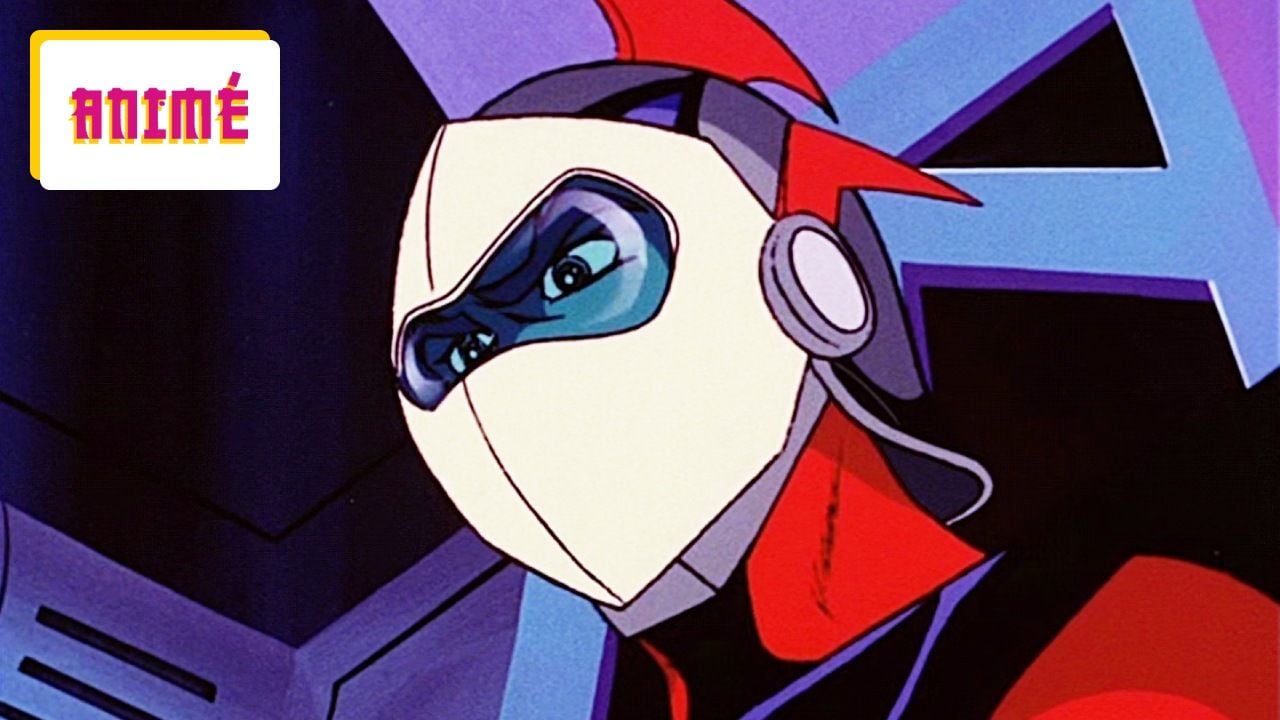
This question has perplexed many fans for years and has spawned numerous theories. Why does Actarus perform two half-turns during his transfer to the head of Goldorak? Let’s explore this puzzle.
Goldorak, the iconic robot created by Go Nagai, has endured the test of time, profoundly influencing artists across various fields.
However, one question has lingered unresolved over the decades, fueling many theories and speculations: why on earth does Actarus, the hero of the anime, execute two rotations when transferring from his ship to the cockpit of Goldorak?
This scene, visible in almost every episode, has raised questions among global fans. These inquisitive viewers have offered explanations and theories, ranging from the practical to the bizarre.
Why does the Prince of Euphor rotate twice in his seat before taking control of Goldorak to confront the dreadful Golgoths? We attempt to delve into this issue.
Autolargue Transfer!
“Transfer!” shouts Actarus before pulling the lever that allows him to move from his saucer to the head of his giant robot. This scene, eagerly anticipated in each episode by fans, was a hallmark of the anime. When the hero uttered this word, it signaled that he was about to take control of Goldorak and commence battle.
The reason Actarus’s seat must rotate twice is purely technical, according to one hypothesis discussed by fans. Apparently, the rails used for the descent of the Prince of Euphor are different from those in a straight line that lead to the cockpit of Goldorak.
This is why Actarus needs to perform these rotations; he has to align himself with the correct rails and then, finally, turn around to position himself properly in the robot’s head.
The sequence of the Autolargue transfer
Is Actarus Moving Too Fast?
A second, somewhat zanier theory has also been proposed. These half-turns might serve to slow down Actarus’s seat, which could otherwise gain excessive speed during the descent. Thus, our hero would avoid crashing through the windshield of the formidable new-age robot.
It’s also possible that these rotations act as decompression stops, similar to those in scuba diving. A stop corresponds to the time spent at a certain depth to reduce the levels of nitrogen or helium remaining in human tissues, especially in the blood.
And what if we tried to make the journey in reverse? When Actarus returns to his ship after a mission, the first half-turn would allow him to face the right direction towards the center of the saucer. Then, to ascend to the cockpit, the second rotation is necessary to get into the correct position for piloting.
A Time-saving Trick for Animators?
Another explanation could be purely practical and relates to the production of anime during the 70s and 80s. Often, the deadlines for producing episodes were extremely tight, leading Japanese studio heads to outsource to South Korea.
Certain signature sequences, which were repeated in almost every episode, thus allowed for faster production since they were pre-animated and ready to use.
All that remained was to integrate them into the episode, saving the animators precious hours of hard work. The half-turns may have been used to extend the transfer scene slightly to ease the load on the teams.
Even a second less of animation to produce could significantly aid in maintaining the pace of releasing an episode per week. This is similar to the “metamorphosis” sequence before Goldorak’s takeoff, which was always the same.
Actarus the Show-Off?
Finally, and perhaps most plausibly, Actarus performs two rotations for show, knowing that he and Goldorak are the strongest. He might allow himself this little flair to mock his adversaries, who are no match for the boundless genius of the infinite.
Time has proven him right, as fans of the series have always found this sequence incredibly cool, much like the “metamorphosis” followed by the legendary “Goldorak, go”! Regardless, if Actarus performed only a single rotation, he would be upside down, which would hardly be practical for facing the forces of Vega…
Similar Posts
- After 48 Years, We Finally Have the Answer to Everyone’s Burning Goldorak Question!
- Why Did the Sci-Fi Series Goldorak Spark Controversy 48 Years Ago? Uncover the Drama!
- Shocking Disney Plot Hole Baffles Fans for 75 Years: What Everyone Missed!
- Outshining Will Smith: Actor Scores Higher in Test Screenings But Snubbed from Promotions!
- Netflix’s New Action-Comedy Series Adapted from Hit Book!

A passionate journalist, Iris Lennox covers social and cultural news across the U.S.