
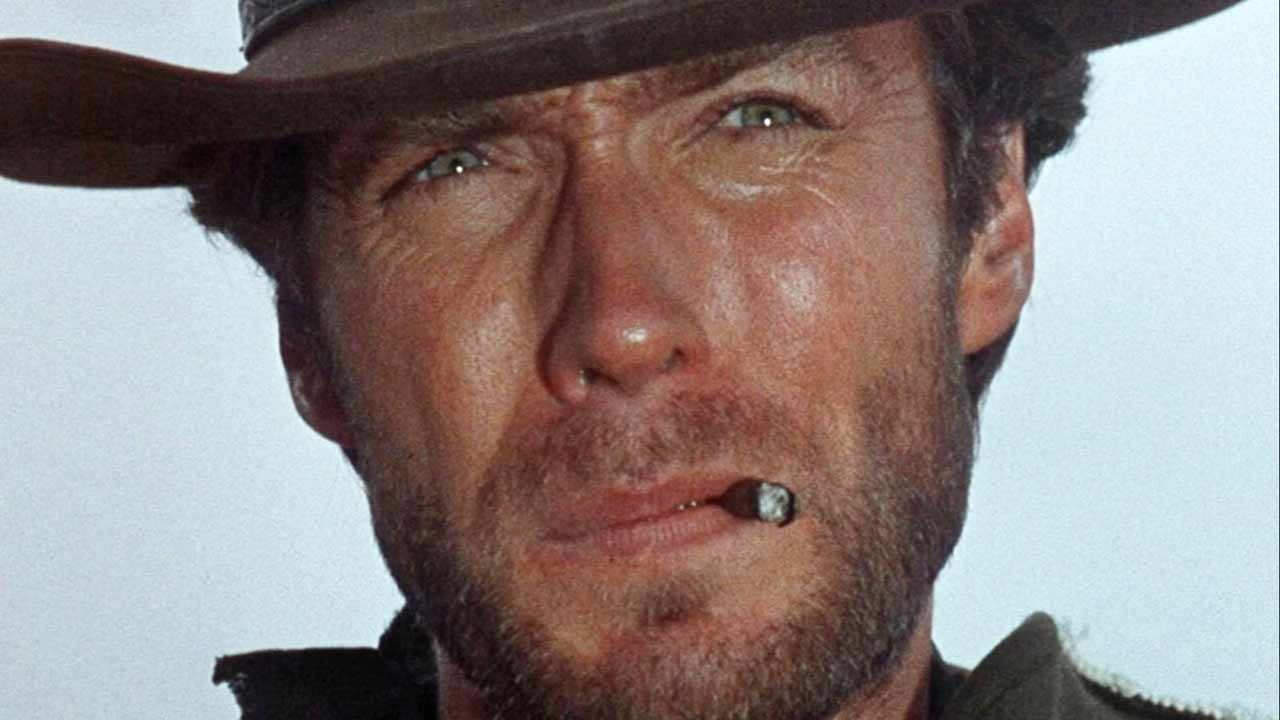
In an engaging interview from nearly 25 years ago, Clint Eastwood shared intriguing behind-the-scenes stories from THE film that significantly catapulted his career forward. The movie in question? A Fistful of Dollars…
After achieving success with the epic The Colossus of Rhodes in 1961 and directing the second unit on Robert Aldrich’s film, Sodom and Gomorrah, Sergio Leone turned his attention to the Western genre, which was experiencing a gradual decline in America at the time.
He chose to remake Akira Kurosawa’s Yojimbo, resulting in A Fistful of Dollars (1964), which he directed under the pseudonym Bob Robertson. Leone thus established himself as the pioneer of a new style, the “spaghetti western,” by breaking away from the conventions of traditional Westerns. He parodied typical situations, emphasized a slow pace, and exaggerated scenes, using close-ups (of guns, faces, glances) as if he were filming landscapes in a narrative filled with savagery and cruelty.
A Fistful of Dollars was subject to a fierce legal battle in the United States, at the end of which Kurosawa won the distribution rights for the film in all of East Asia, where it was hugely successful, as well as a share of the profits worldwide.
Because of this legal battle, the first installment of the Dollar Trilogy didn’t reach American soil until February 1967, 18 months after its release in Europe. The film played a significant role in launching Clint Eastwood’s career, which began with the Western TV series Rawhide in 1959.
“I Thought It Was Going to Be a Huge Flop”
The man who became known as “The Man with No Name” was, in fact, hesitant to accept the role in Leone’s film. Interestingly, Clint Eastwood was not Leone’s first choice to portray the character. Initially, the role was offered to Eric Fleming, co-star of Rawhide, who was a rising star at the time and found the role too risky, thus turning it down.
Richard Harrison, a B-movie actor, was the second choice and he too declined, but he suggested Clint Eastwood to Leone. In an interview filmed in August 2003, Clint recounted his beginnings under Leone’s direction.
He explained how strange he found the idea of shooting a Western in Italy, and how he thought it would be a failure. He then learned that the filming would take place in Spain. “I thought it was going to be a huge flop, but I was going to travel to Italy and Spain. I had never been to either of those places, so it was going to be a great experience. It was a Western version, a Western remake of Yojimbo, and I always liked Yojimbo, so that’s what inspired me to take on the project.”
“Chaotic” Work Methods and Piracy
The Hollywood veteran also shared how he was surprised by the “chaotic” work methods and limited resources of Leone’s team, which were quite different from what he was accustomed to in the United States. Not to mention the much smaller budgets…
“We were making films on a very small budget. It wasn’t a big Italian production. The budget was about $200,000 for the film, maybe a little more. It was a very tight budget, with German, Spanish, and Italian funds, and these three partners were constantly arguing over cost distribution. It was a quite chaotic system, and efficiency was not as high as that of an American, British, or even modern Italian team.”
A tight budget also meant a DIY approach to all props and costumes… “I brought a lot of my own gear. I bought jeans, brought the boots I wore on Rawhide, and generally, almost all the costumes. We found a few items in Spain, but unlike an American film, or any medium to high-budget production where you have doubles and triples of everything in case of loss or damage, we had nothing. I had only one hat; if I lost it, that was it. It was irreplaceable.”
The actual filming? “It was very odd because we were filming a scene and, off-camera, you could see people playing frisbee, making gestures, or telling jokes. You could hear people talking…” Eastwood continued.
He fortunately has memories as vivid as the first day. “I remember we were shooting in Almería and they needed a tree for a hanging scene, with a rope. They couldn’t find one. There was an old tree in someone’s garden. It was dead, but it was on their property.
So they sent a team and cut it down. The owner came out and asked, ‘What are you doing?’ And they said, ‘We’re from the road services; this tree is dangerous, it could fall on the road, so we’re removing it.’ The man believed them. That’s the kind of creativity they were capable of.”
AlloCiné features over 40 articles daily on the latest news in movies and series, interviews, streaming recommendations, quirky anecdotes, and cinema trivia about your favorite films and series. Subscribe to AlloCiné on Google Discover to explore daily the riches of a site designed by and for film enthusiasts.
Similar Posts
- Clint Eastwood Reveals Western Love Shaped His Oscar-Winning Career!
- Tarantino Claims This is the Only Perfect Trilogy & It Stars Clint Eastwood!
- Clint Eastwood’s Rise to Stardom: How This Hit Redefined Westerns in the US!
- Must-Watch: Clint Eastwood’s Best Film Ever, 33 Years Later! Top 10 Westerns to See in Your Lifetime
- Clint Eastwood’s Best Thriller Ever: Legendary Star Regrets Passing on Iconic Film!

A passionate journalist, Iris Lennox covers social and cultural news across the U.S.