
Follow AlloCiné on Google
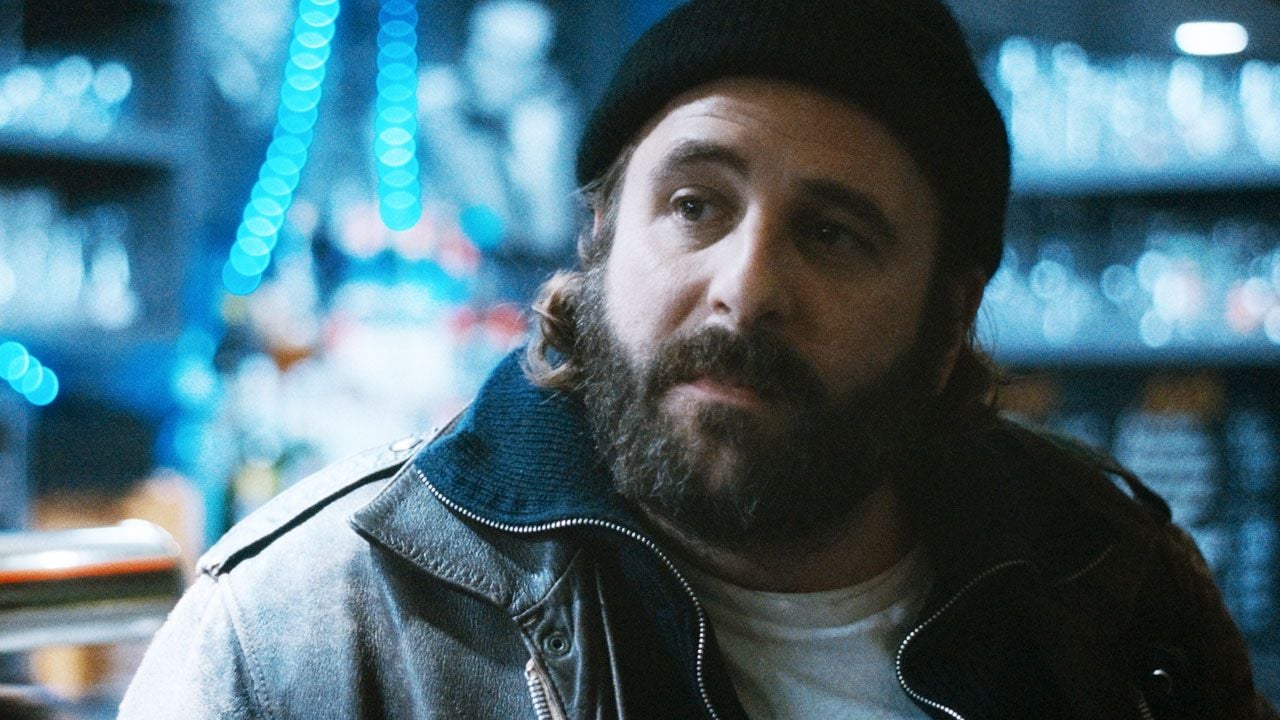
Five years after “Médecin de nuit,” Vincent Macaigne returns in front of Elie Wajeman’s camera with “Comète,” a choral drama set in the streets of a Paris neighborhood.
What’s it About?
As a comet crosses the Parisian sky, fates intertwine in a mysterious dance. Two friends traverse the city, reflecting on their lives. A young woman reunites with a father she no longer expected. Another sells drugs for her brother. Elsewhere, two souls haunted by death find each other. Meanwhile, actors rehearse a play that strangely mirrors these lives. A tapestry of unexpected encounters and the random events that weave our existence.
Cosmic Rehearsal
In 2021, Elie Wajeman directed Vincent Macaigne through the streets of Paris, offering him one of his best roles with “Médecin de nuit.” Five years later, the duo reunites for a new drama, a portrait of the French capital, yet “Comète” is confined to one area, around the Gare du Nord, whose tracks serve as a vanishing point in one of this choral story’s settings.
This film marks a major difference between Wajeman’s third and fourth features, as Vincent Macaigne plays a more secondary role in “Comète,” where multiple destinies intertwine over a very short period—the time during which the titular comet, a symbol of life’s brevity and the way paths converge and diverge, is visible in the Paris sky.
“A comet in the sky makes everyone look at the same point”
“I love this word. I love this title,” says Elie Wajeman in the press kit. “I knew a cosmic element would bring all these stories together. It added weight to the narratives. An existential idea of things. Not a ‘Parisian’ film but a film about a great city under a cosmic sky. And then a comet in the sky makes everyone look at the same point. It’s beautiful and simple. We look in the same direction. A union between beings.” Among them: a man who reunites with a friend from a psychiatric institute, a therapist and one of her patients, both haunted by death, a ghost, and a theater troupe, working on a play whose choice is significant.
Citing Louis Malle’s “Vanya on 42nd Street” as a major influence (along with the cinema of John Cassavetes), Elie Wajeman indeed uses Anton Chekhov’s “Three Sisters” as a reflection of the joys, sorrows, and dreams of the characters portraying it, in this segment that forms the heart of his narrative where connections are made, broken, and/or revealed as the minutes pass. “La Ronde” by Arthur Schnitzler, brilliantly adapted by Max Ophüls in 1950, also comes to mind, except that the movement of the story is not circular but straight and shooting, like the tail of the comet of the title.
A stroll-shaped opus with dramatic, cosmic, and metaphysical accents, but above all human, through which Elie Wajeman confirms his ability to bring his characters to life as well as the streets of Paris in front of his camera.
Similar Posts
- French Star’s Directorial Debut: The Comedy You Shouldn’t Watch With Mom!
- “Absolute Masterpiece”: Vincent Macaigne’s Best Film Scores 4.3/5 – Top French Movie of 2025!
- Playing with Fire: Vincent Lindon and Benjamin Voisin Ignite in Timely Social-Political Drama!
- Must-See Comeback: Alban Ivanov Talks Success, Burn-Out in ‘Challenger’
- Tom Hanks Rarely Saw Robin Wright on Forrest Gump Set: The Surprising Reason Why

A passionate journalist, Iris Lennox covers social and cultural news across the U.S.