
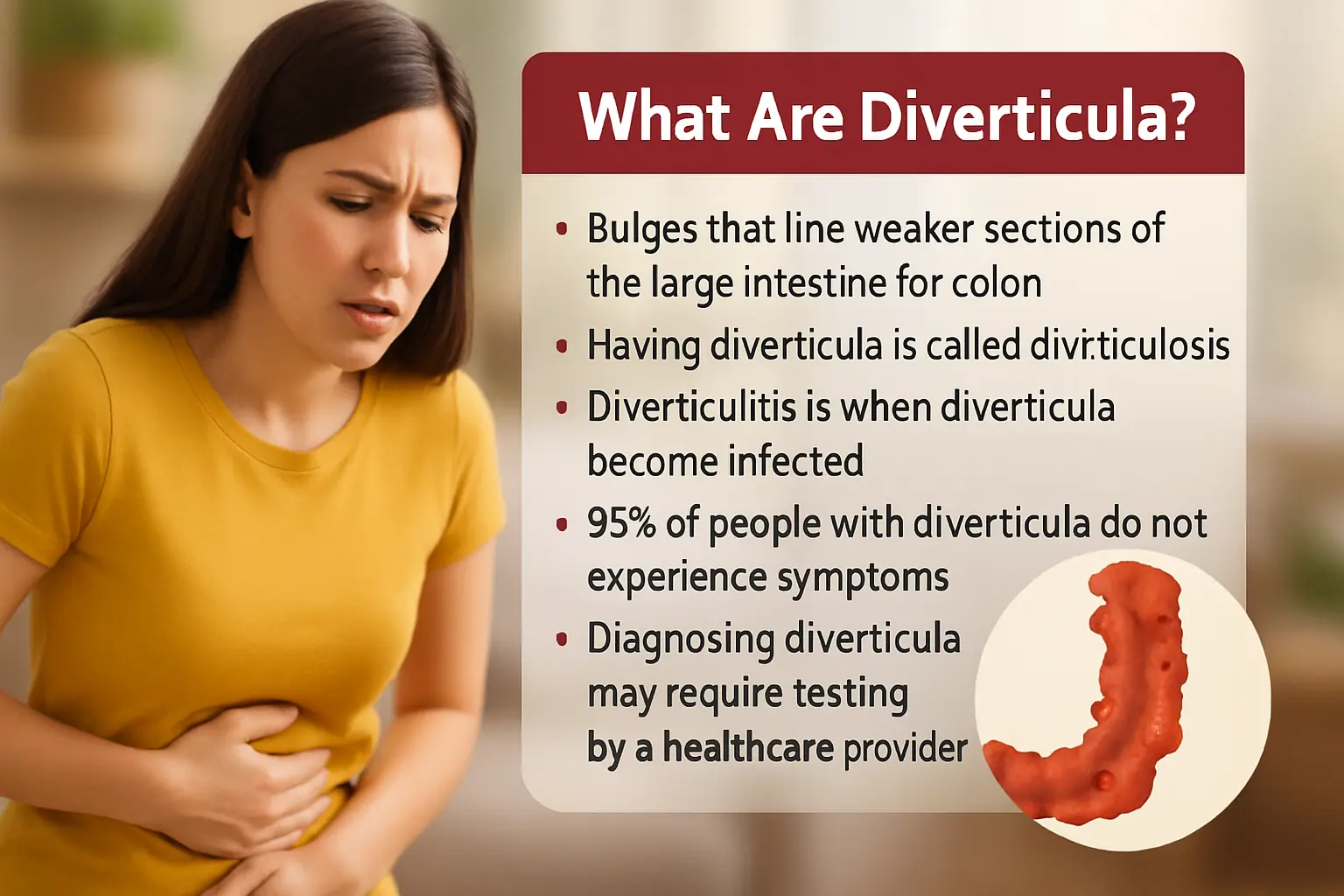
Diverticulitis Warning Signs: The Telltale Pain on Your Left Side and More
If you thought your intestines were just quiet contributors behind the scenes, think again. Sometimes, the colon likes to throw a surprise party — and not a festive one. Enter diverticulitis: a condition that can catch you off guard with some very real warning signs. Read on to discover what to watch out for and why your left side might warrant extra attention!
What Are Diverticula (And Why Should You Care)?
First, let’s clear up some vocabulary. Diverticula are small pouches that form on the outside of the colon — sort of like tiny pockets your colon never asked for. Unlike polyps, which grow inside the intestine, these pouches stay put on the outside. Most of the time, they’re harmless and don’t make a peep — a state known as diverticulosis.
But don’t let their silence fool you. Problems only arise when these diverticula become inflamed: that’s when you have diverticulitis. Once inflamed, these fragile pouches are vulnerable. They can even perforate, giving bacteria room to multiply. It’s the inflammation (not just the appearance of the pouches) that brings trouble.
Spotting Diverticulitis: Pain, Fever, and Digestive Woes
So, how does diverticulitis wave its red flag? The classic symptom is pain — and not just any pain, but one lurking on the lower left side of your abdomen. It’s so typical that it has earned the playful nickname “left-sided appendicitis.” In fact, this pain is found in 90% of cases. If a doctor presses on this area, it often triggers a reflex contraction, making the spot extra tender.
But pain’s not coming to this party alone:
- Fever: This is diverticulitis’ other headline act. If the diverticula are infected, the fever can reach particularly high levels.
- Digestive troubles: Nausea, vomiting, diarrhea, and even intestinal cramps can all join the fray. Transit is often disturbed, leaving you feeling out of sorts.
Together, these symptoms might resemble those of various other intestinal troubles — so while they’re not exclusively reserved for diverticulitis, their combination should put the condition on your radar. If you’re over 70 and experiencing pain in the lower left side alongside a fever, diverticulitis becomes a likely suspect.
Who Is at Risk (and How Often Does It Happen)?
The frequency of diverticulitis increases past age 40, according to the MSD Manual. Before age 50, men are more often affected; after 50, women catch up in numbers. Now, here’s the thing: while diverticulosis is usually silent and difficult to diagnose, a flare-up of diverticulitis is much easier to spot, thanks to pain and fever.
Not everyone with diverticulosis will face diverticulitis. Estimates suggest that 15–25% of those with diverticulosis may eventually develop an episode of diverticulitis. If you’re part of a more fragile group — like older adults or those with weakened immune systems — you’re at a higher risk for complications. The use of certain medications, such as non-steroidal anti-inflammatory drugs (NSAIDs), aspirin, or corticosteroids, can also increase your chances of getting diverticulitis.
And here’s the kicker: this isn’t always a one-time event. About a third of patients who’ve had diverticulitis may experience another episode within 10 years, according to the French National Society of Gastroenterology. Talk about an unwanted encore!
Potential complications shouldn’t be taken lightly. If left unchecked, diverticulitis can lead to abscesses, fistulas, or even peritonitis. That’s why a swift diagnosis is essential to prevent serious problems.
Treatment: How Medical Experts Tackle Diverticulitis
Treating diverticulitis focuses primarily on controlling pain and digestive upsets. As Dr. William Berrebi, a gastroenterologist and gut microbiota expert, explains, the doctor may prescribe painkillers (analgesics). If the fever runs especially high or the pain is very intense, antibiotics (such as amoxicillin) combined with probiotics can be used to address infection and support gut health.
Diet also plays a role. A low-fiber diet is recommended during active episodes, helping reduce intestinal irritation while the colon recovers.
To sum up: if your left side is giving you grief, especially with a fever and unsettled guts, pay attention! Quick recognition and treatment of diverticulitis can make all the difference. Trust your body’s signals — your colon doesn’t give pop quizzes for fun. If in doubt, consult a medical professional without delay, and treat your gut to the care it deserves!
Similar Posts
- One in three Crohn’s patients gets joint, skin or eye symptoms: what to watch for
- 10,000 amputations yearly: these hidden foot signs every diabetic must spot urgently
- 45% affected: why skipping the dentist could raise your risk of heart attacks and cancer
- Stranger Things Star Can’t Forget the Duffer Brothers’ Shocking Decision!
- Intellectual Challenge: Spot the Ten Mistakes in This Image to Test If Your IQ Is Truly Above 107

A passionate journalist, Iris Lennox covers social and cultural news across the U.S.