
3 Minutes Saved, €15 Less: How Slowing EVs on Highways Changes the Game
If you’re the sort who believes that driving at 130 km/h is the only way to cross France (or at least get to your holiday destination before your playlist starts looping), let’s talk about a little experiment that just might change your mind—and save you both charging time and pocket money in the process.
The Grand Electric Adventure: 700 km, Twice
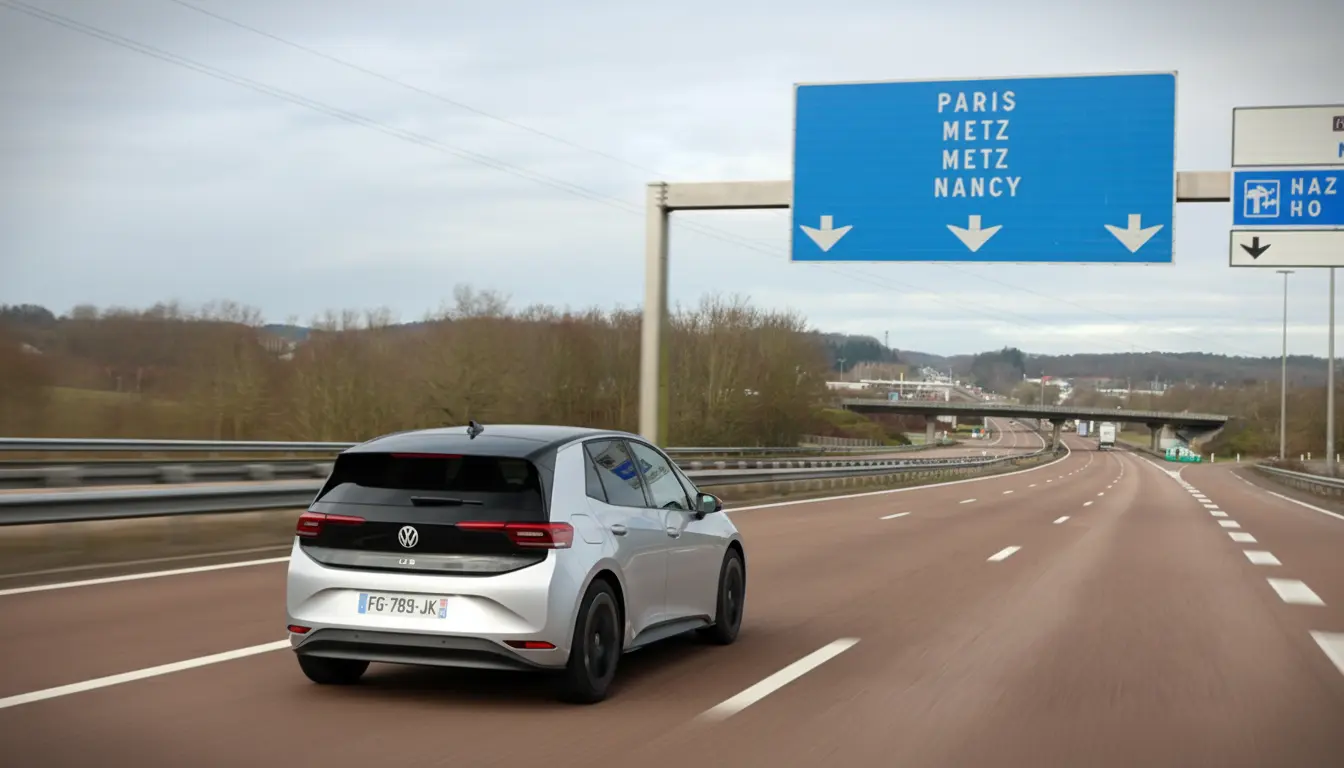
Anyone driving electric knows the simple math: if you go a bit slower, you stop less—especially when your battery is on the smallish side. To test this theory properly, a pair of near-identical 700 km loops were completed on France’s main highways. First, the route was tackled at legal limits, mostly a brisk 130 km/h. The second time, the pace was dialed down by 10 km/h, never exceeding 120 km/h. The car in question? A freshly facelifted VW ID.3 with a modest 58 kWh battery (starting at €35,990, after a €4,000 bonus deduction—see, we promised numbers).
Each run started at 8 AM on consecutive weekdays, under almost identical traffic and weather conditions. The journey began in the south of Oise, then wound through the Paris region to pick up the A13, swung around Rouen, shot north via the A28 and A16 toward Calais, looped down to Lille and Valenciennes, and finally used the A1 to return home. In total, a typical holiday road trip, just with more battery anxiety and fewer beach towels.
The 130 km/h Approach: Battery and Patience Tested
For the first leg, the approach was simple: enjoy the ID.3’s 204 hp and zip up to each speed limit with confidence—but also with as much anticipation of slowdowns as possible to avoid wasting precious energy. Outside temperature? A nippy 3°C. Even with a bit of traffic, reaching the A13 took about an hour and a half.
At every opportunity, the speed was pinned to 130 km/h. Looping around Rouen, the battery started showing its limits—after just 210 km, “the gauge” glared back, and with chargers scarce along the A28, a detour to Neufchâtel was necessary with only 16% battery left. Five minutes later, plugged into a rapid charger… which sadly struggled to break 80 kW. After a 30-minute recharge to 80%, it was back on the autoroute—this story repeats, with stops near Calais and Valenciennes, each becoming necessary after about 155–160 km at highway speeds, and each recharge taking another nice chunk of time out of the adventure (let’s not even talk about the winter chill slowing the charging down further).
With the battery begging for mercy after just over an hour at speed, stops near Calais and Valenciennes involved more waits—around 40 and 36 minutes, respectively. One ambitious attempt to make it home without another stop was thwarted by a headwind and falling evening temperatures, forcing another quick top-up. Total stats for the day: 710 km traveled (plus a few drops out of the way for chargers), 7h48 minutes actually moving, and 2h06 on breaks—spending about €75 on electricity (that includes a modestly-priced initial home charge, but public DC chargers aren’t cheap).
The 120 km/h Strategy: Slower, But Smarter
The next day, same time, same pre-warmed cabin, but with the motto: “Let’s take it easy.” Weather and traffic were almost identical. Hitting the A13 took a mere 1:30 longer than before, but from there on, speed was capped at 120 km/h. Results? Average consumption dropped to 18 kWh/100 km (down from 19.5 kWh/100 km the day before). Despite a slight delay, the battery percentage was still a healthy 28% when passing the previous day’s first charging detour, enough to reach a farther station (albeit a slow, lonely charger in the wilds, which took another 40-minute pit stop).
From the A28 and A16, quick-charging stations remained stubbornly spread out—sometimes 5 km off the main route and definitely not the sort of place you choose for a picnic. But, with slower speeds, the projected range jumped to a comforting 245 km. Skipping previous stops, it was possible to cover longer stretches—making it to Calais with nearly 100 km still indicated. The rest of the journey was a similar story: extended range, about 189 km between stops, and a final brief 20-minute top-up less than 100 km from home.
- Total time? Only 3 minutes longer for the full loop.
- Actual driving took 30 minutes more, but by skipping a fourth pit stop the total break time dropped by 27 minutes.
- Best of all, electricity costs dropped by €15, clocking in around €60 for the trip.
Conclusions: Slow Down, Charge Less, Stress Less
This isn’t about setting a strict new rule for every EV driver—shorter trips or super-optimistic charging strategies may still win in a pinch. And yes, seasoned electric road warriors might argue that charging below 10% battery would further reduce downtime, if only charging station placement played along. But the outcomes on this typical winter journey are clear: slowing down by just 10 km/h made for fewer stops, shorter overall break time, and a notably lighter load on the wallet—without much loss in arrival speed.
The biggest lesson? Know your car, know your conditions (distance, temperature, charging network), and don’t be afraid to take it easy. Sometimes, swapping a spot on the left lane for one on the right saves more than just electricity—it gives you back a little road trip serenity (and, quite possibly, €15 for an extra pastry at the next café stop).
Similar Posts
- They drove 2,500 km in an electric car and reached a blunt verdict: diesel still rules the road
- No green bonus since 2017: the hidden costs and limits of hybrid cars revealed
- 50% drop in value after 3 years: the hidden costs electric car owners face
- China Is Constructing a Building-Sized Battery: A Groundbreaking Solution for Charging Electric Transport
- No more electric scooters or bikes: the new road sign you must recognize now

A passionate journalist, Iris Lennox covers social and cultural news across the U.S.