
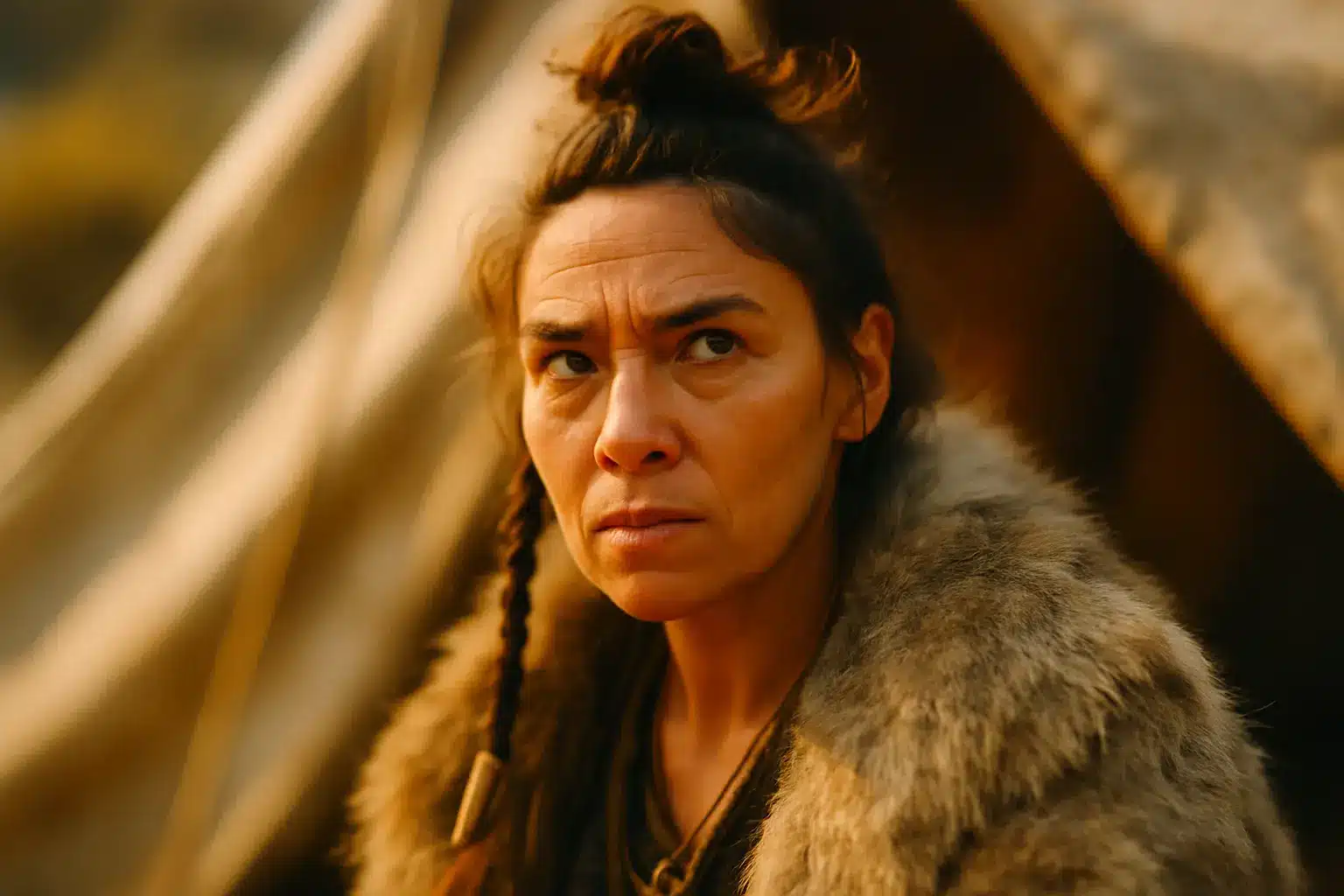
7,000 Years: Every Human Today Shares These Ancient Migrant Ancestors
The story of humanity is, quite literally, written in our bones—and in the intricate twists of our DNA. If you thought DNA was just good for revealing some awkward family secrets or updating your family tree, think again! Coupled with archaeological investigation, genetic analysis opens up entire chapters of our species’ past that no written text could ever capture. As Evelyne Heyer of the National Museum of Natural History reveals in her fascinating work, the study of ancient DNA goes far beyond simple paternity tests.
The Genetic Time Machine: Unearthing Forgotten Peoples
It’s dizzying—almost enough to make you drop your double helix. The beauty of ancient DNA, meticulously extracted from old bones, is that it lets us glimpse completely vanished human groups. We see evidence that whenever two human species encountered one another, cross-breeding almost inevitably took place. Yet these foreign genes didn’t always slip quietly into our DNA. Most of the time, they struggled to integrate—unless, that is, they provided an adaptive advantage.
For example:
- Tibetans inherited a gene from Denisovans that helps them thrive at high altitudes.
- Europeans received from Neanderthals a gene crucial for oxygenating the fetus—a pretty handy trait for survival!
This isn’t just a bit of fun trivia for the next pub quiz. By studying the non-coding DNA around such genes, researchers can estimate their age. The smaller the variation, the older it is. Think of it as a book: with each generation, little tweaks appear in the text, and by tracking those tweaks, we can build the genealogy of different variants.
What Ancient DNA Reveals About Us… and Our Cousins
Combine this genetic detective work with archaeological data, and you get remarkable insights into how our ancestors lived. This approach teaches us about:
- Social structures: like how couples formed, either within or outside the group
- Emergence of inequalities
- Historical shifts in power—such as when patrilocal authority took hold (which, by the way, is still an unsolved puzzle)
Surprisingly, the big reveal for the family reunion: all humans alive today share common ancestors from just 6,000–7,000 years ago. Even Evelyne Heyer admits the initial articles on this topic left her astounded. It’s true—we’re not just distant cousins; we’re practically side by side on the genealogical couch. Had our most recent common ancestors lived any further back in time, the Earth would have needed to be packed with billions of people, not merely a few million. And, yes, for those carrying European heritage, Charlemagne is indeed among the many ancestors in their genealogy.
Migrants, Mixtures, and the Challenges of Tracing Roots
Every single one of our ancestors was a migrant, and every single one of our descendants will either migrate or marry a migrant. Sure, some stayed put, but human populations have always mingled—except for those nestled in extreme geographic isolation.
Curious about your own roots? If you want to know if you have European, African, or Asian ancestry, genetic tests will get you a broad answer. But for more precise origins, it’s a matter of reference samples—which are often incomplete or skewed. For example, if French reference data mostly comes from southern France, then a French person from the north might be identified as Belgian or German. Twist ending: ancestry tests have their quirky blind spots.
When it comes to really ancient history, archaeologists now turn to archaeoproteomics—the study of bone proteins, which survive longer than DNA. They also use isotopes, especially strontium from water, which settles in our teeth and bones. With reference maps, scientists can track where someone lived during childhood (when their teeth matured) and where they died. Meanwhile, research teams are growing cells to study genetic variations found in Neanderthals, aiming to uncover what those ancient genes actually did.
So, what’s the lesson from all this genetic time travel? Whether your ancestors stormed across continents or simply crossed the street, you’re part of a vast, interconnected family whose history—like all good stories—is rich, tangled, and well worth discovering. And if a DNA test calls you Belgian when you’re actually from Normandy, just remember: in the grand scheme of humanity, we’re all a little mixed up—and that’s what makes our story remarkable.
Similar Posts
- Archaeologists make a surprising discovery while analyzing Hittite tablets
- First Look at Cocorico 2: Didier Bourdon & Christian Clavier Star in 2026’s Most Anticipated Sequel!
- 4,000-year-old woman’s face reconstructed: the surprising story hidden in her features
- 325 million years frozen: how two giant sharks reveal a lost prehistoric world
- A mysterious bacteria has emerged aboard China’s space station—are astronauts in danger?
A passionate journalist, Iris Lennox covers social and cultural news across the U.S.