
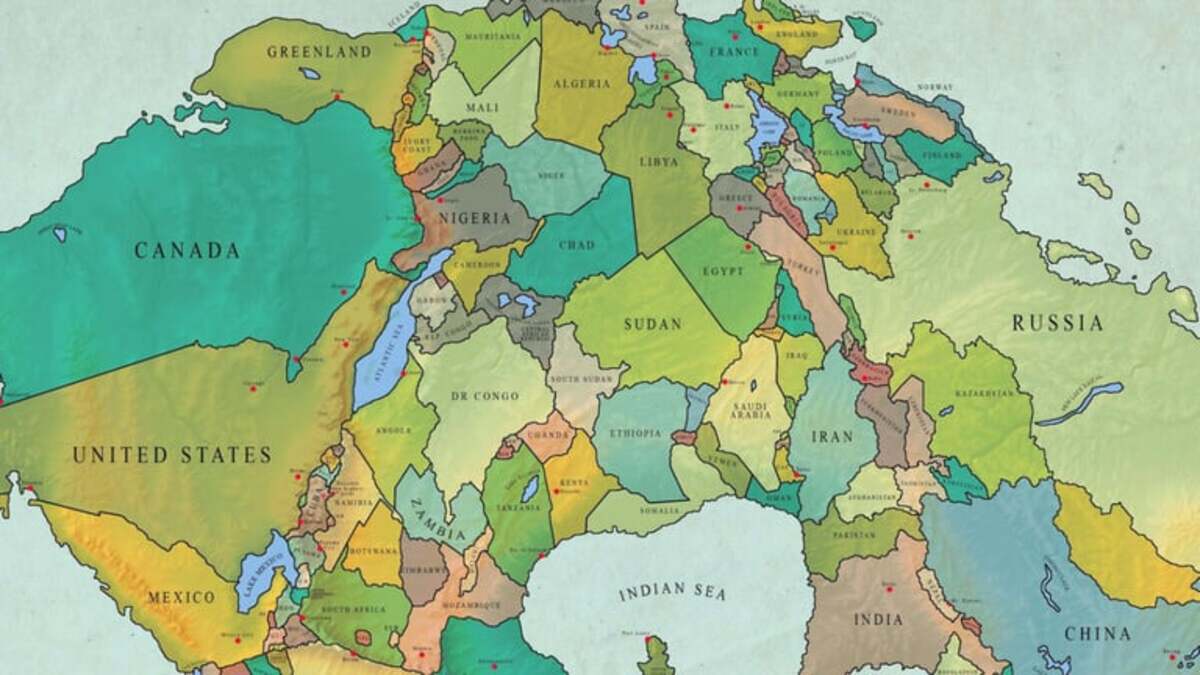
Imagine this: the Earth as we know it—its oceans, continents and coastlines—all squashed together like puzzle pieces forced into place. No more Atlantic. No more Mediterranean. And a very different idea of what counts as your next-door neighbour. This is not the plot of a science fiction novel but a serious prediction from geologists who study the slow dance of tectonic plates.
According to leading researchers, in about 250 million years, our familiar continents could clump back together into one colossal landmass, dramatically reshaping life on Earth. The name for this supercontinent? Pangæa Ultima. If it sounds like something from a Marvel film, rest assured: the science behind it is solid.
From drifting apart to crashing together
Roughly 200 million years ago, the original supercontinent—Pangæa—split apart, launching the continents on their current journey. That separation gave us the world map we memorised in school, but it was never meant to be permanent.
Enter Christopher Scotese, a geologist behind the PALEOMAP project, who’s been charting the Earth’s tectonic shuffle. His models suggest that over the next few hundred million years, the Atlantic Ocean will vanish as the Americas collide back into Europe and Africa. The Indian Ocean, meanwhile, will shrink into a new inland sea, with what’s now familiar landmasses reshuffling into a new geological jigsaw.
France finds itself a new postcode
In this future version of Earth, France—and much of western Europe—gets a major relocation. Instead of gazing south towards the Mediterranean, the country could end up nestled near the Arctic Circle, cheek by jowl not only with Spain and Italy, but also with North African nations like Algeria and Morocco.
As for the UK, it could be far from its current island identity, potentially tethered to what is now the Portuguese coast or even nudging into parts of West Africa. Picture a school geography lesson in the year 250,002, with pupils learning that France once had beaches on the Mediterranean, now a dusty memory.
Elsewhere, unexpected unions abound: Cuba and the US could merge into one landmass, Korea might become landlocked between China and Japan, and Greenland could sidle up closer to Canada—geological odd couples everywhere you look.
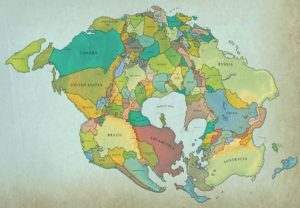

A scorched Earth?
But before you start planning a time-travelling getaway to future-France, there’s a darker side to this continental reunion. According to climate simulations published in Nature, Pangæa Ultima won’t be a particularly welcoming place for most life forms.
With volcanic activity peaking due to the crustal collision, carbon dioxide levels could double, and average global temperatures might exceed 40°C across much of the land. Add a slightly brighter Sun—about 2.5% more luminous than today—and you’re looking at a climate not unlike a full-body sauna you can’t escape.
This extreme heat could lead to a mass extinction of mammals, potentially rivaling past extinction events in scale. Life may hang on, but it’ll be clinging to the cooler corners of the planet.
Northern lights and last refuges
Still, there’s a glimmer of hope—literally and figuratively. The northernmost regions, such as those near today’s Arctic, may remain relatively temperate. Areas like future-France (in its chilled new location), the UK, Portugal and slices of North Africa could become climate sanctuaries, offering bearable temperatures and more reliable freshwater sources.
In a world that’s baking from the centre out, these high-latitude zones could become the last holdouts of habitability—humanity’s new equators, if you will.
The Earth, ever the shapeshifter
If this feels like an epic tale, it’s because it is—one written over hundreds of millions of years. And Pangæa Ultima isn’t the only ending on the table. Other scientific models predict supercontinents called Aurica, Novopangaea or Amasia, depending on which way the plates decide to move. But all signs point to the same truth: Earth is constantly evolving. What seems permanent—our borders, our coastlines, even our climate—is just a fleeting moment in geological time.
In the end, our continents are like characters in a very slow drama: drifting apart, crashing back together, and always changing the shape of the stage beneath our feet. And Europe? Well, it might just find itself the Arctic’s newest neighbour.
Similar Posts
- NASA warns : Life on Earth may not be possible after this shocking date
- NASA detects a massive anomaly deep under Earth—and it’s spreading fast
- NASA sounds the alarm : massive planetary anomaly spreads globally, linked to unknown forces beneath Earth’s crust
- 325-million-year-old giants revealed: inside the exceptional discovery of two prehistoric sharks
- $30 Million Per Episode: This Western Series Is Among the Most Expensive Ever!

A passionate journalist, Iris Lennox covers social and cultural news across the U.S.