
Follow AlloCiné on Google
“Michael Cimino, an American Mirage,” directed by Jean-Baptiste Thoret, is a profoundly moving and melancholic documentary on the America that permeated and molded the work of a great filmmaker. A must-watch for fans of the director.
In April 2010, critic and filmmaker Jean-Baptiste Thoret hit the road with Michael Cimino from Los Angeles to Colorado. “If you want to understand my films,” the director of “The Deer Hunter” had told him, “you need to see the landscapes where they were shot.”
This recorded oral road movie initially turned into a profile published in Cahiers du Cinéma and later into a book, Michael Cimino, the Lost Voices of America (published by Flammarion). Ten years later, although Cimino has passed away, his spirit still lingers in certain corners of the American landscape.
Filmed during the winter of 2020 and edited in the first year of the pandemic, “Michael Cimino, an American Mirage” was first broadcast in a 52-minute format on the Arte channel under the title Michael Cimino: God Bless America.
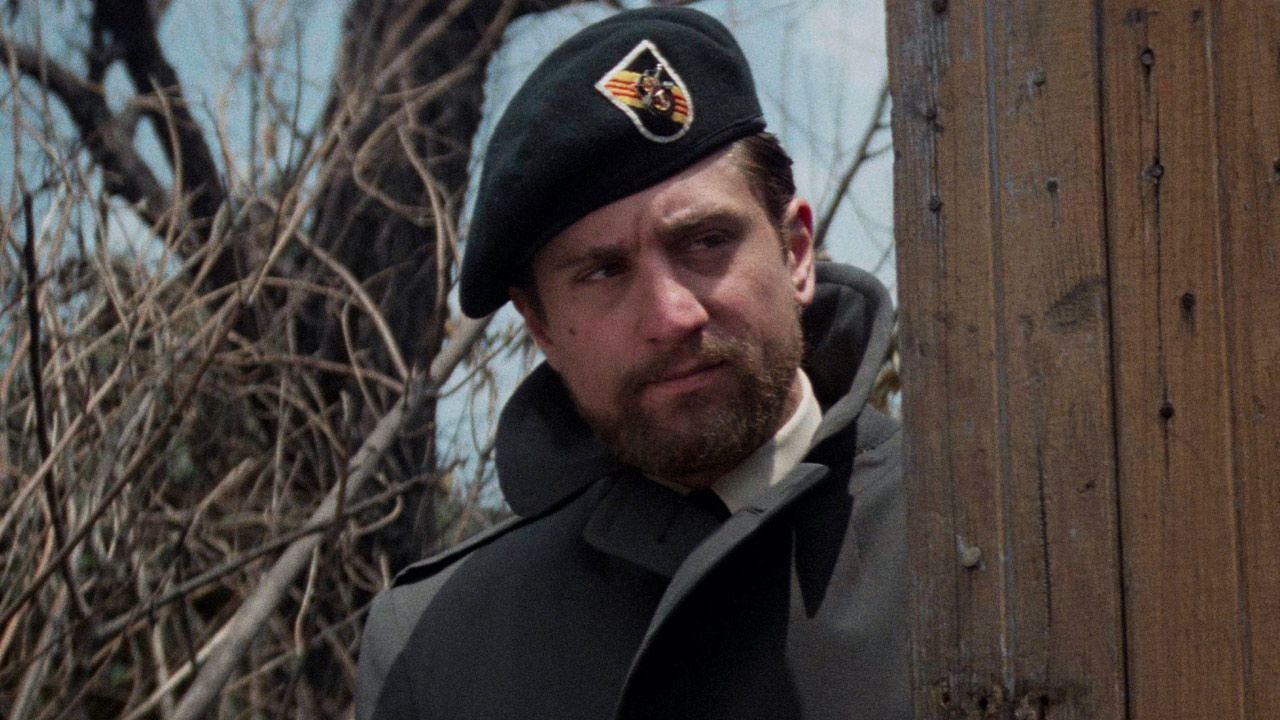
In this extended version, over two hours long, Jean-Baptiste Thoret retraces the steps of Michael Cimino, exploring his version of the West—a real and imagined America that infused and formed the substance of his films, from the majestic spaces of Montana where he shot “Heaven’s Gate” to the steel town of Mingo Junction, Ohio, which served as the backdrop for “The Deer Hunter.”
“Compromise Was Not an Option”
Michael Cimino, an American Mirage paints a portrait of a filmmaker who is one of the rare examples of directors whose career was abruptly cut short while on the rise, only to be crucified barely two years later due to the failure of “Heaven’s Gate” and its harsh demystification of the American West, leading to the bankruptcy of United Artists.
Although Thoret doesn’t completely agree with this view, as he explained in an interview published in Libération newspaper. If the filmmaker had brilliantly bounced back with “Year of the Dragon,” it was “The Sicilian” in 1987 that marked the untimely end of Cimino’s career.
Tortured, ill-suited for the Hollywood machine, the man was as brilliant as he was egotistical, uncompromising, and unable to make the artistic or financial compromises that might have constrained his vision. The film is rich in anecdotes, notably from Oliver Stone, who remarked: “If he had worked more simply, delved into himself, he would have done himself a favor. It would have better served his vision. […] He wanted to break all the rules too quickly. He could have slowed down and worked more. I don’t think he died having completed his work, as an artist.”
While Quentin Tarantino avoids playing into the narrative of the director’s rise and fall, choosing instead to dissect with passion the importance of the deceased director’s work, James Toback, who once wrote a screenplay for him about mafia boss Frank Costello, does not hesitate to state bluntly: “As a director, you can feel his obsessive, manic, and fetishistic nature. Everything was done as he thought and wanted it to be. There was no room for compromise.”
“In John Ford’s Time, It Was Healthier to Keep Working”
Cimino, also a man of paradox, voices his frustration and then resignation against a Hollywood industry that had long marginalized and stifled his creativity, while praising a bygone era, the 1930s and 40s; a time when major studios operated under strict contracts with directors like John Ford, whom he deeply admired. Back then, the grip and control of the studios were absolute, leaving little room for the artistic freedom Cimino championed.
“In John Ford’s time, it was healthier to keep working, making three films a year instead of one every twenty years. It didn’t always result in excellent films, but it’s less harsh than launching an independent film in today’s film industry,” Cimino told Jean-Baptiste Thoret during their discussions.
Thoret then asked him if he felt he belonged to an earlier generation, arriving too late to implement his vision, much like Sam Peckinpah, whose tumultuous career was marked by lost battles against systemic mismatches. Cimino greatly admired Peckinpah. “You’re right, I would have preferred that pace. I remember, and find it crazy, Victor Flemming directed ‘Gone with the Wind’ and ‘The Wizard of Oz’ in the same year! I prefer that!”
A Moving and Melancholic Road Movie
One could further discuss this aspect extensively showcased in the documentary, filled with poignant memories of the filmmaker, who also reflects on his masters, his relationship with cinema, and the power of the image, of his cinema.
For over 30 minutes at the start of his film, Jean-Baptiste Thoret revisits the small town of Mingo Junction. Once thriving and flourishing thanks to its steel industry and blast furnaces, it is now merely a shadow of its former self, resembling a near-ghost town, gradually emptied of its inhabitants. The blast furnaces, once the economic heart of the region, have long been extinguished.
Another victim in the long list of towns in the Rust Belt, Mingo Junction enthusiastically hosted the filming of “The Deer Hunter.” Meeting with residents who remember, some of whom participated, and recount how the film captured the heart and soul of its people, is deeply moving. Especially when one of them, an extra in the film, shares his own Vietnam War experience, following a discussion about the legendary Russian roulette scene. One of the greatest scenes in cinema history.
“The filming of the movie changed the lives of some,” one resident shares; “suddenly they felt important because we had chosen to make this film here.” John Savage, also featured in the film, adds: “They felt reflected by the film. They had lost people to the war. These small towns are likely the ones with the most volunteers. That’s still true today.”
And one’s heart tightens. Because many of the locations used during the film’s shooting are no more, or are falling into disrepair due to lack of maintenance and funds. It’s also a question of priorities in a town that now survives more than it lives. And because it represents a part of a certain American culture, nostalgic and disenchanted, proud yet sometimes harsh, that is slowly disappearing.
Interested in discovering this film? Michael Cimino, an American Mirage is available on DVD and Blu-ray published by Potemkine.
Similar Posts
- After 37 Years, Cinema Legend Regrets Not Thanking Clint Eastwood: An Unforgettable Experience
- He thought he was rescuing a sheep—but it turned out to be something else entirely
- Ana de Armas Weeps Through Entire Movie! Declares It a 25-Year-Old Masterpiece
- Optical illusion : Only a genius can spot the hidden deer in the forest
- Alain Chabat Returns as Lead in Cult Saga 16 Years Later!

A passionate journalist, Iris Lennox covers social and cultural news across the U.S.