
Add Allociné to your favorite sources
Al Mulock’s brief appearance in “Once Upon a Time in the West” left an indelible mark on the film’s production due to his tragic fate. This article explores the dark shadow cast over Sergio Leone’s legendary Western.
“Once Upon a Time in the West,” directed by Sergio Leone, is considered a hallmark of his illustrious career. Yet, beneath the iconic imagery of this 1968 Western lies a grim chapter that unfolded while the crew was filming in Spain.
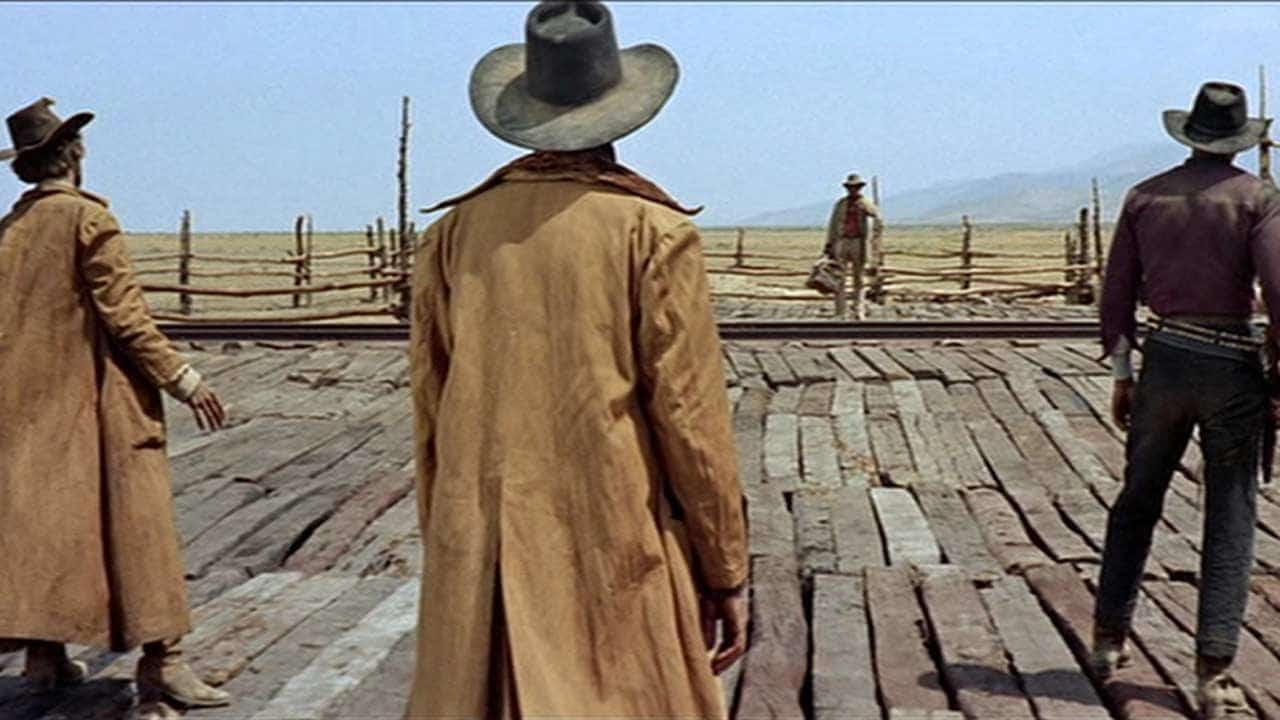
The tragic story centers around Canadian actor Al Mulock, who Western enthusiasts might recognize from various Italian Westerns. In Leone’s film, he played Knuckles, one of the three gunmen waiting for Harmonica, portrayed by Charles Bronson, in the memorable opening scene at the train station.
A Familiar Face in Sergio Leone’s Films
Born Alfred Mulock Rogers, Al Mulock studied under Lee Strasberg before starting his acting career in the United Kingdom. By 1955, he was acting alongside Paul Douglas in “Joe Macbeth,” soon taking roles in both film and television.
His screen presence often led him to play unsavory characters: dealers, henchmen, and other criminals, although there were exceptions, such as in “The Horror Train.”
However, it was Sergio Leone who truly immortalized his visage in film history. In “The Good, the Bad and the Ugly,” released in 1966, Mulock played a gunslinger who attempts to kill Tuco (Eli Wallach), featuring in one of the film’s most famous lines delivered by Tuco: “When you have to shoot, shoot, don’t talk!”
A Staple in Italian Westerns
After his stint with Leone, Mulock naturally continued to gravitate towards the Western genre. He appeared as a drifter in Sergio Corbucci’s “The Cruel Ones” (1966) and played a particularly vicious bandit in “Day of Anger” (1967). In 1967, he also had a small uncredited role as a detective in John Huston’s “Reflections in a Golden Eye.”
His collaboration with Leone in “Once Upon a Time in the West” would, tragically, be their last.
The Tragedy During Filming
In May 1968, with the Western still in production, Al Mulock leapt from his hotel window. Witnesses to the event included script consultant Mickey Knox and production supervisor Claudio Mancini.
Surviving the initial fall from the first floor, Mulock was severely injured, suffering a punctured lung and a broken rib, and was urgently rushed to a medical facility while still in his costume.
Mickey Knox later recounted an infamous anecdote about Leone’s reaction upon arriving at the scene. Not yet aware of his actor’s critical condition, Leone reportedly said, “Get the costume, we need the costume!”
Claudio Mancini eventually drove Al Mulock to the hospital, but the actor died before they arrived.
Uncertain Circumstances Surrounding His Death
Various theories have emerged over the years regarding the reasons behind Mulock’s fatal act. Mickey Knox suggested in his book “The Good, the Bad and the Dolce Vita” that Mulock was battling addiction and struggling with withdrawal while in Spain for the shoot.
Another theory points to his personal life; Mulock was reportedly devastated by the death of his former partner, actress Steffi Henderson, from cancer.
Mulock’s death required the production to complete the famous train station scene without him. While close-ups of Knuckles in the final cut are indeed of Mulock, long shots or those from behind used a stand-in dressed in the same costume, explaining why his character is missing from much of the confrontation with Harmonica.
His screen time was brief, but his role in one of the most iconic sequences of a film that has become a Western classic over the decades is unforgettable.
If you are having thoughts of suicide, talking about it can change everything. In the U.S., you can call the National Suicide Prevention Lifeline at 1-800-273-TALK (1-800-273-8255), a free, confidential 24/7 service.
Every day, Allociné offers over 40 articles covering film and TV news, interviews, streaming recommendations, and quirky facts about your favorite movies and shows. Subscribe to Allociné on Google Discover to explore daily insights from a site designed by enthusiasts for enthusiasts.
Similar Posts
- Almost Cast! Jean Gabin Nearly Starred in a Sergio Leone Epic, Under One Condition
- 10 Years Ago, Natalie Portman Starred in a Western Everyone Forgot!
- Tarantino Claims This is the Only Perfect Trilogy & It Stars Clint Eastwood!
- Sergio Leone’s Ultimate Western Hero: Why No Other Actor Would Do!
- Sergio Leone’s Masterpiece Ruined: How One of Cinema’s Greatest Films Lost Its Soul

A passionate journalist, Iris Lennox covers social and cultural news across the U.S.