

Currently captivating audiences, Le Dossier Maldoror by Fabrice du Welz revisits the harrowing events surrounding the Marc Dutroux case, which shook Belgium to its core. Blending fiction with reality, the film is set in Charleroi in 1995, where the mysterious disappearance of two young girls triggers an unprecedented media frenzy and public outcry. At the center of the story is Paul Chartier, played by Anthony Bajon, a young, idealistic police officer assigned to a secret surveillance operation codenamed “Maldoror.” The task? Monitor a repeat offender suspected of heinous crimes. But when faced with systemic failures within the police force, Paul takes matters into his own hands, leading to a descent into obsession.
While the film begins with a faithful reconstruction of events that led to Dutroux’s arrest, its second half veers into fictional territory, offering a dramatic and thought-provoking conclusion that leaves viewers grappling with moral dilemmas.
Why Did the Story End This Way?

In real life, Marc Dutroux was arrested, convicted of multiple murders, sexual assaults of minors, and other heinous crimes, and sentenced to life imprisonment. But in the film, Paul Chartier pursues Marcel Dedieu (a fictionalized stand-in for Dutroux, played brilliantly by Sergi Lopez) and ultimately kills him, only to end up in prison himself. The film’s ending asks its audience: What would you do in his place? Would you take justice into your own hands?
Fabrice du Welz, reflecting on his narrative choices, shared: “For me, this is not a revenge film or a vigilante story. It’s about a young man rendered powerless by a justice system that’s utterly broken. The movie grapples with two key questions: justice and evil. How do we confront them, and how do they shape us?”
Du Welz’s approach was intentional. By fictionalizing the latter half of the story, he sought to explore universal truths. “Sometimes, fiction and tragedy allow for a deeper understanding of terrible events,” he explained. “This ending—a complete departure from reality—offers a visceral way to grapple with these themes. While it could be interpreted as an act of vigilantism, that wasn’t my intent. My aim was to position Paul Chartier at the intersection of two profound questions: How can a just man act in a society where justice fails? What choices remain when the system collapses?”
Paul’s Silence: A Statement of Integrity
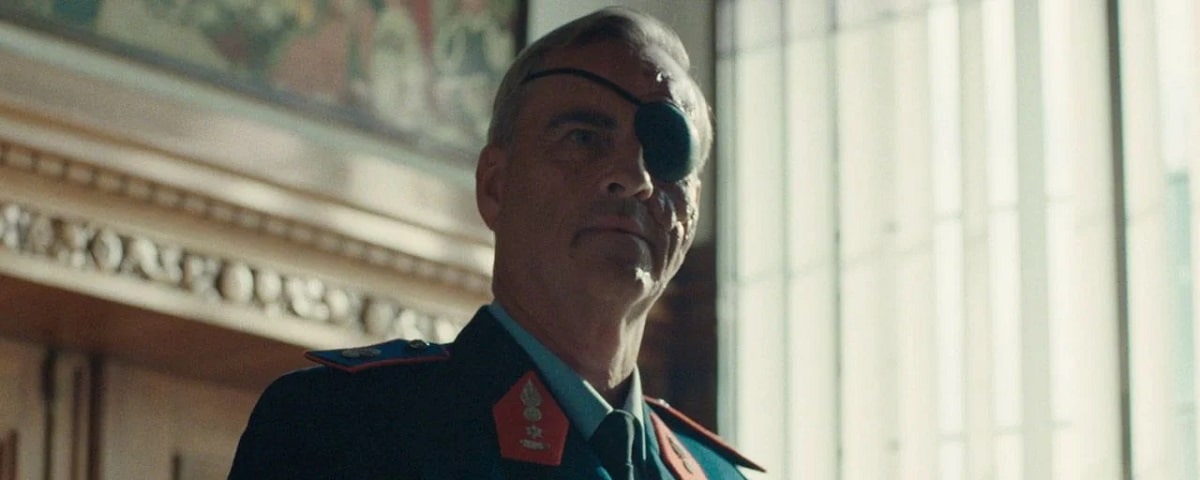
After killing Dedieu, Paul finds himself behind bars. His former superior, Charles Hinkel (played by Laurent Lucas), visits him with a proposition: testify against a high-ranking official implicated in one of Dedieu’s incriminating videos. Despite the gravity of this request, Paul refuses to cooperate.
Du Welz explained this pivotal moment: “There’s significant ambiguity surrounding the ending, but I believe that’s what strengthens the film. For me, Paul’s refusal is about one thing: integrity. After all he’s endured, Paul has lost all faith in the justice system and those who represent it. Collaborating with someone like Hinkel, a political manipulator, is unthinkable to him. He refuses to serve the interests of a system he has come to despise.”
This refusal is also a symbolic act of defiance. Hinkel, who previously scapegoated Paul for police failures, is now attempting to climb the political ladder by exploiting him. Paul’s decision to stay silent underscores his unwillingness to be used as a pawn in a corrupt system. “Paul’s integrity resonates with those who have suffered the most,” Du Welz added, emphasizing the emotional connection audiences feel to the character’s moral stance.
Fiction as a Mirror to Reality
Du Welz’s film treads a delicate line between documentary realism and fictional tragedy. He noted that while great care was taken to make the story feel authentic, the fictional elements were crucial for achieving catharsis and exploring broader questions about justice, morality, and human resilience. “Sometimes, the only way to confront the unthinkable is through the lens of tragedy,” he remarked. “It’s a medium that not only helps us process pain but also allows us to ask questions that have no easy answers.”
Ultimately, Le Dossier Maldoror challenges viewers to reflect on their own values. What does justice mean in a world where systems fail? How do we confront evil without becoming consumed by it? And most importantly, where do we draw the line between justice and vengeance?
Through its gripping narrative and unflinching portrayal of moral ambiguity, Fabrice du Welz’s film leaves an indelible mark, reminding us that the most complex questions often have no clear answers.
Similar Posts
- Fabrice Luchini Unveils New Role in “Victor comme tout le monde” – Find Out Why It’s Personal!
- Must-Watch Hit! Explore One of Fabrice Luchini’s Best Comedies with a Sci-Fi Twist
- Paul Walker’s Final Role: Remembering the Star 12 Years After His Passing
- Discover the Origins of Jeff and Cathy’s Accents in “Les Tuche” with Stars Jean-Paul Rouve & Isabelle Nanty!
- Unforgettable Christophe Lambert in ‘Greystoke’—But Which Famous Actor Almost Snagged the Role?

A passionate journalist, Iris Lennox covers social and cultural news across the U.S.