

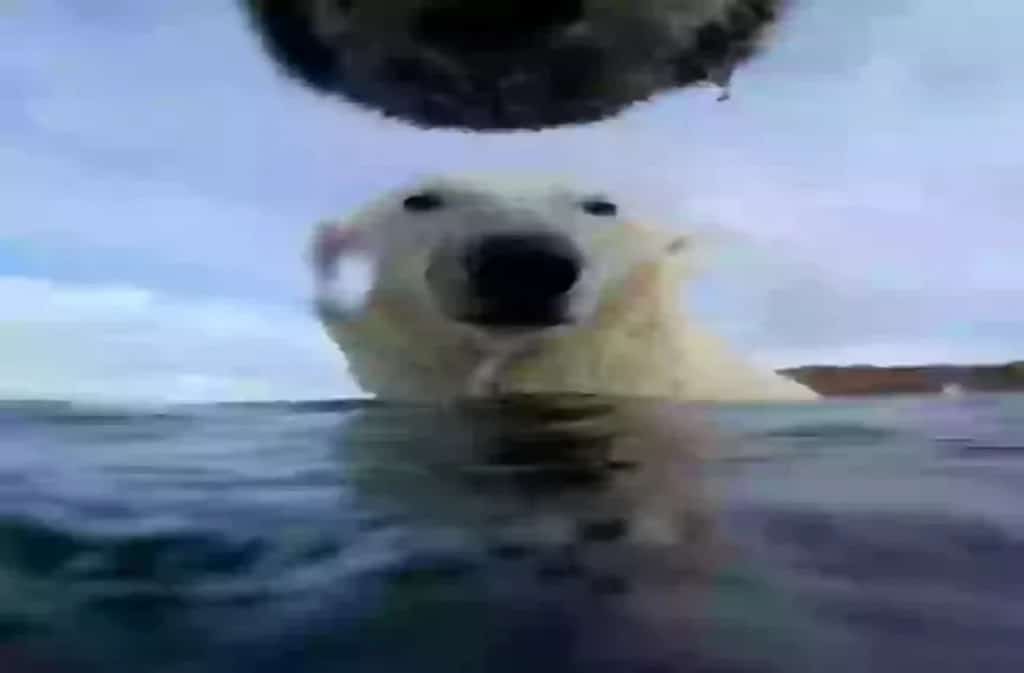
We often imagine polar bears as the rulers of the frozen north—fearsome, solitary figures pacing confidently across vast expanses of ice. But when researchers recently strapped tiny cameras to the necks of twenty polar bears in Canada’s Hudson Bay, they captured something unexpected, and heartbreaking: not power, but struggle.
These never-before-seen recordings offer an intimate glimpse into the lives of these Arctic giants as they navigate a landscape that’s quite literally melting beneath their feet. The footage, taken over three years, paints a stark portrait of an animal forced to adapt—and failing to thrive—in a world that no longer fits its needs.
Melting ice, dwindling hope
The Hudson Bay region has seen a three-week increase in ice-free days since 1979, according to findings published in Nature Communications. For polar bears, this change is catastrophic. They rely on sea ice as a platform to hunt seals—meaty, high-fat prey essential to their survival. Without that icy highway, bears are being forced onto land for longer stretches.
And what’s there to eat on land? Not much, it turns out. Cameras recorded bears nosing through bird carcasses, chewing on grass and berries, even gnawing on driftwood. One bear attempted to eat a piece of seaweed. Another fought a rival in the shallows—desperate behaviour for animals typically adapted to solitary hunting on solid ice.
A dangerous diet shift
Polar bears are naturally resilient creatures. But the shift from a marine-based diet to scavenging on land isn’t just inconvenient—it’s unsustainable. Researchers found that 19 out of the 20 monitored bears lost weight over a three-week period. One bear dropped an alarming 36 kilograms.
For context, an adult male polar bear can weigh around 450 kg, while females average closer to 250 kg. Losing 20 or 30 kg in a matter of weeks isn’t a minor dip—it’s a sign that their energy demands far exceed what they’re able to find on land.
“These videos gave us a real-time look at how resourceful and intelligent these animals are,” said Anthony Pagano of the US Geological Survey. “But no matter how clever they are, there simply isn’t enough on land to sustain them.”
More swimming, more risks
In the absence of reliable food sources, the hungriest bears were seen taking bigger risks. Some swam longer distances than usual, behaviour not typically seen in healthier bears. It’s a dangerous gamble in cold, open water—especially with limited fat reserves to fuel those journeys.
This is the sobering reality scientists are now facing: climate change is reshaping the Arctic so rapidly that one of its top predators can no longer hunt the way it’s evolved to. And the consequences are showing up in their bodies—leaner frames, riskier behaviours, and less chance of survival.

A call to action, from the top of the world
The polar bear is already listed as a vulnerable species by the International Union for Conservation of Nature (IUCN). But the evidence now captured on camera makes their plight impossible to ignore. It’s no longer a distant issue—it’s real, it’s visible, and it’s happening right now.
These intimate video diaries aren’t just about bears. They’re about the fragility of an entire ecosystem, and a warning to us all. If the most formidable predator in the Arctic is struggling to find food, what does that say about the health of the planet?
Similar Posts
- Stop the Sale of Alaska! Urgent Call to Reject Dangerous Budget Bill
- 80s and 90s Action Film Master Knew How to Motivate: ‘Won’t Waste My Work Day’!
- This map reveals what Earth will look like in 250 million years—and Europe gets a surprising twist
- Must-Watch Netflix Thriller: Stunning Heroine Shines in This 16+ Adventure!
- Masterpiece Alert! John Carpenter’s Top Film Scores 4.2/5 – A Cult Classic!

A passionate journalist, Iris Lennox covers social and cultural news across the U.S.